

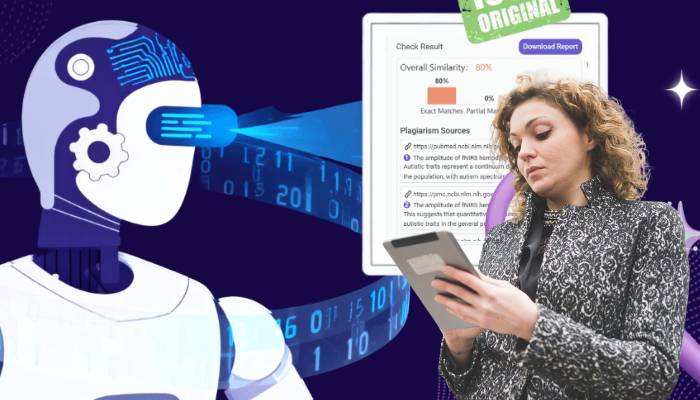
Authenticity is the currency of PR. Even the slightest hint that a press release or other document is recycled or pilfered can tarnish your credibility with a journalist, client or business partner. Where there’s smoke there’s fire, so don’t give anyone a reason to think you’re anything but original. When a reader senses that a document, or part of a document, has been lifted from another source, it’s an instant turn-off. Your work must be your own. Period.
Transparency is a hallmark of professional PR. More importantly, it must be authentic. There’s no worse offense than representing your work as someone else’s. Using someone else’s words without permission or attribution can cause irreparable harm to a company’s credibility and reputation.
Avoid using automated content generation tools. It’s very obvious when a press release has been generated by one of these tools and it’s completely against everything PR stands for. The tone and style of your work should reflect the personality and culture of your business. Ultimately, it’s the job of a PR professional to protect the reputation of their business or client. That includes turning in original work and avoiding actions that could harm their business or client’s reputation.


What Is an AI Plagiarism Checker and How Does It Work?
Publicists work under tight schedules and multiple revisions. It’s easy to unconsciously copy a line that’s already been published. Such tools can help you find them. But what are they?
Simply put, they are tools to check your work against. You paste what you’ve written and they will run it through the billions of documents available online. News, blogs, academic papers. Everything.
If you’ve repeated something too closely, they will warn you. Not in a ‘plagiarism detected, you might be arrested’ kind of way. But in a ‘you should rephrase this’ kind of way.
But how do they work?
The algorithm is simple. The tool will dissect your copy into sentences, phrases and strings. It will then match them with the content of their databases.
If it finds a sentence that is too similar to something that has already been published, it will return a similarity score. Then it’s easy. You rephrase. You modify it. You make it your own again. And, actually, it spares you a whole lot of explaining afterwards.
Best AI Plagiarism Checkers for Publicists
1. CopyLeaks
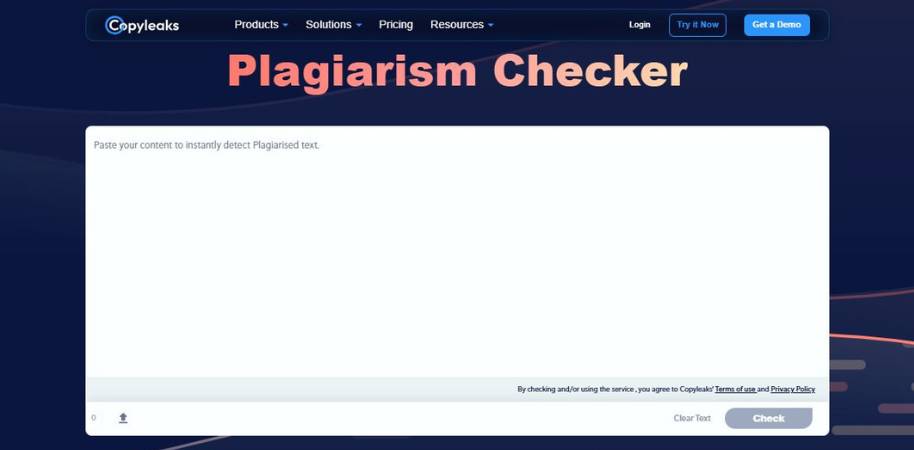
It’s pretty straightforward: CopyLeaks is an AI plagiarism detector used to find out if a piece of content is original or has been copied from somewhere else on the web. It scans text against billions of web pages, academic journals, and documents, and it even detects AI-created content and paraphrased copies. Think of it as a fact-checker for your copy, except, instead of buzzing around in your ear while you write, it hums away in the background and lets you know when something sounds a little too good (or bad) to be true.
Features
- AI and Plagiarism Detection This tool scans content for both plagiarism and AI-generated content, meaning you can get a comprehensive view of whether your copy contains any copy-pasted or machine-made sentences in one go.
- Detailed Similarity Report Once you’ve scanned your copy, you get a report showing you a similarity score and the URL of where the content was originally published, so you can easily double-check and edit your copy.
- Cross-Language Plagiarism Detection It can detect when content has been copied and translated into another language, which is a more common occurrence in worldwide content publishing than you might think.
- Billions of Content in Database This tool scans your copy against billions of web pages, journals, and internal documents, which maximizes the chances of catching any duplicate or spun copy.
- Code Snippet Detection As well as copy, this tool can also detect plagiarism in source code or AI-generated code snippets, a useful feature for dev teams and academia.
Verdict
Overall, CopyLeaks seems like a robust, no-messing-about plagiarism tool. It’s designed for people who want a thorough scan, and not just a quick and dirty check. The reports are comprehensive, and the fact it can detect paraphrased or AI-written copy provides an added level of comfort. If you care about the originality of your copy (and you should), this is a decent tool to check out.
2. Originality.ai
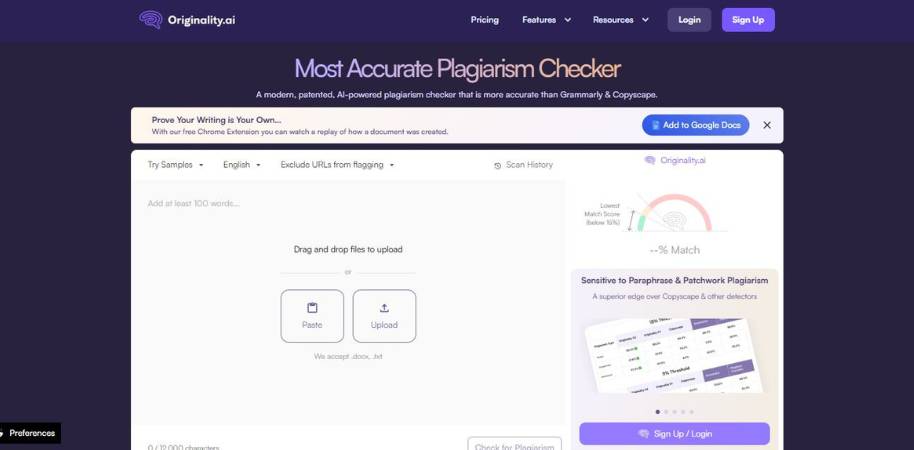
Originality.ai is a plagiarism detector that’s designed with AI-generated content in mind. It identifies plagiarized or paraphrased text in a given piece and checks against a large database of documents and websites. As you might expect, it also attempts to detect AI-generated text, a growing concern for many publishers and editors. Here are some of the key features that Originality.ai offers:
- Advanced Plagiarism Detection: The tool checks for direct plagiarism as well as paraphrased and patchwriting plagiarism, using syntax and semantic analysis to identify potential matches in a massive database of websites and documents.
- AI Detection: Originality.ai will analyze a piece of content and attempt to determine whether it was created by a human or AI, giving editors a confidence level regarding the content’s originality.
- Similarity Report: Similarity reports identify instances of plagiarism and provide links to the original content.
- Multiple Content Checks: In addition to plagiarism detection and AI-generated content detection, the tool also offers readability analysis, fact-checking, and grammar checking.
- Bulk or Site Analysis: For larger organizations, Originality.ai allows for the analysis of multiple documents or entire websites.
Summary
Originality.ai seems to be geared towards organizations that work with a lot of content, like publishers, SEO firms, and editors who cannot risk publishing plagiarized or AI-generated material. I appreciate that the tool combines plagiarism detection and AI content detection into a single tool; I think that’s a fairly unique approach that will be quite useful. The resulting reports are comprehensive without being overwhelming, making it easier to identify and correct problematic content. If originality is your top priority, this is a tool that can help reduce the risk of publishing AI-generated or plagiarized content.
3. GPTZero
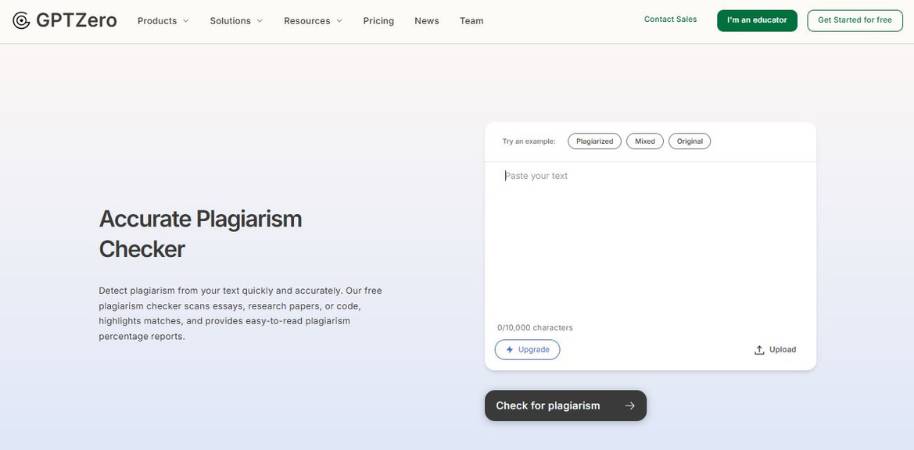
GPTZero is a plagiarism and content analysis tool specifically built for detecting AI-generated content. It scans the text to identify potential plagiarism and to predict the likelihood that the text was generated by a machine. Essentially, it’s aiming to address the two most frequent questions every editor has: Did they copy this? And did a robot write this?
Features
- Plagiarism detection: like other plagiarism tools, it scans the text against a massive database of web content to identify instances of copied text.
- AI detection: it scans the text to predict whether it was generated by a human or a robot. This seems particularly useful for publications that rely heavily on freelance or syndicated writers.
- Sentence by sentence analysis: rather than providing an overall score, it analyzes the text on a sentence-by-sentence basis. This means you can see which sentences are suspect, and which are clean.
- Readability: it highlights sentences and provides a simple report that outlines problematic areas, along with a probability score.
My verdict
Overall, I think GPTZero is a useful tool for any editor who wants to fact-check content before hitting publish. I like that they’re tackling both plagiarism and AI-generated content, as those two things are increasingly related. I also like that the reports are relatively easy to read, which makes them easier to scan. If you work with a lot of outside contributors or freelance writers, a tool like GPTZero might just bail you out of an embarrassing situation or two.
4. Winston AI
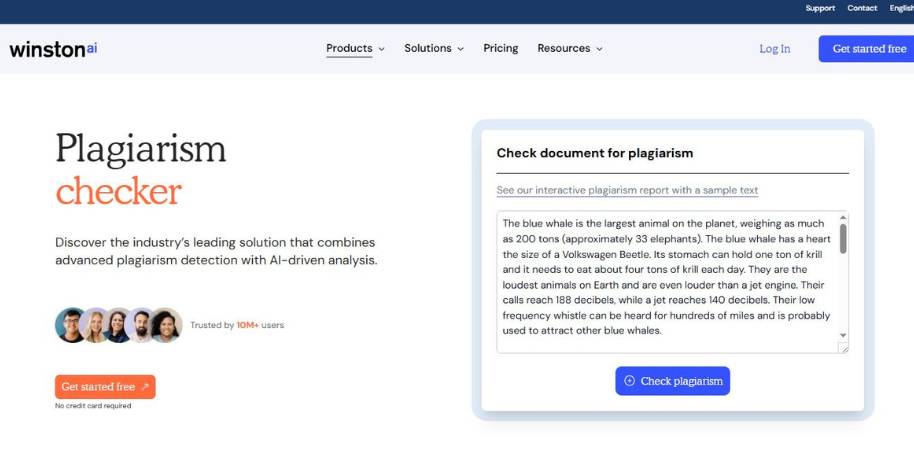
Winston AI is a tool that helps you detect plagiarism by checking your articles against large databases of web pages and publications and detecting potential AI generated content. The goal here is to let you run your articles against their database before you hit publish.
Main Features
- Plagiarism Detection: It checks your articles against large databases of web pages and publications and lets you know where you may have plagiarized content.
- AI Detection: It can detect AI generated content, useful when reviewing guest posts, freelance work, or anything that feels a bit too polished.
- Sentence Highlighting: Instead of sending you a report, they highlight the sentences they think need your attention.
- Document Importer: You can import a PDF or a document to check for plagiarism.
Conclusion
Winston AI is a no-frills plagiarism detector that accomplishes what you need it to do. I’m glad that you can easily see the results without having to navigate a fancy dashboard. If you publish a lot of articles, and you want to minimize post-publish surprises, I’d definitely consider using this tool.
5. Rephrasy
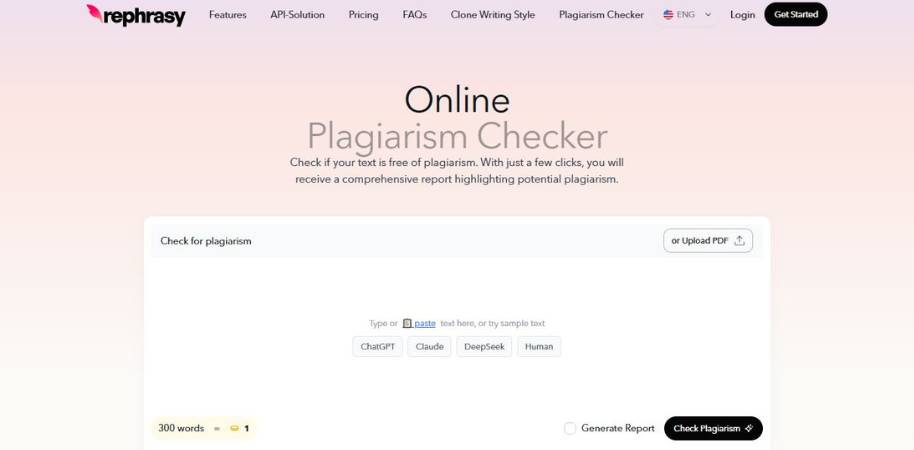
Rephrasy has a plagiarism tool that you can use to check the originality of your content. It scans your content against web pages and documents and works in tandem with other content analysis tools available on the platform. Essentially, you copy and paste your content into the tool, perform a scan, and if necessary, make a few tweaks before publishing your work.
Features
- Plagiarism Detection Scan The tool performs a scan on your content and checks it against web pages to identify any part of your content that is similar to any other content available online. It’s essentially an alert system that tells you to “hang on, you might want to rephrase that”
- AI Content Detection The tool comes with an AI content detector that identifies whether any content has been written by AI.
- AI Text Humanization Essentially, Rephrasy is a platform that helps you rephrase AI-generated content to make it sound more human-like. You can modify the wording, the structure of the sentences, and more.
- Writing Style You can customize the tone and style of the rephrased content to fit your writing style or the style that you need for a particular document.
- Multi-Lingual Support Rephrasy supports multiple languages and this is quite useful especially if you need to check the originality of a document that isn’t written in English.
Final Thoughts
Rephrasy is more of a toolset than a plagiarism checking tool. Not only do you get to check the originality of your content, but you can also modify the tone, check for AI-generated content, and more which is quite useful in today’s digital age. Of course, the efficacy of the tool depends on the document that you are using it for, so, it’s always good to use your discretion when it comes to the tool. That being said, if you’re looking for a quick way to check the originality of your content and make a few tweaks here and there, Rephrasy is quite useful.
6. AISEO
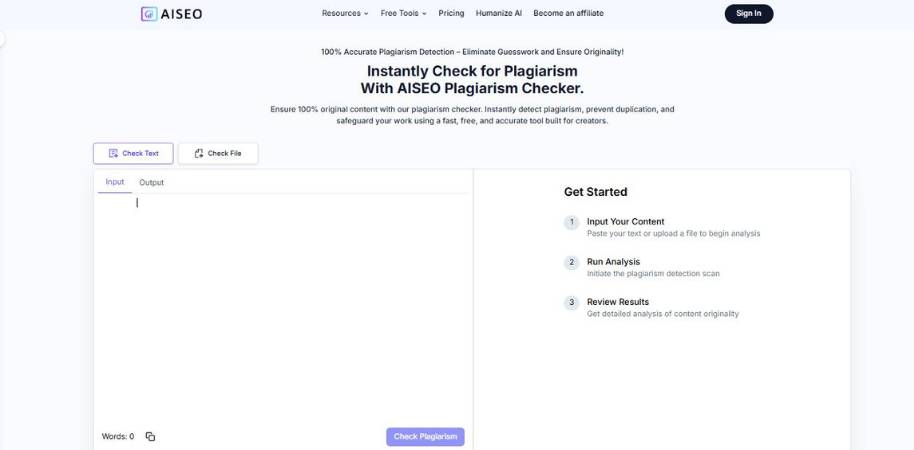
AISEO Plagiarism Checker is a tool for content creators to ensure the integrity of their work before publishing it on the web. It analyzes the text against millions of web pages and documents to detect similar phrases or duplicate content. Use it by copying the content into the box and checking if there’s anything that sounds suspiciously familiar.
Features
- Plagiarism Checker Tool on the Web It matches the uploaded content with other content available on the web and finds matching instances. This is a convenient tool to run a check before publishing the content to warn about content that might sound too familiar.
- Similarity Report and URLs for Similarity The tool will display a similarity report and will show the URLs from where the similar content is picked. This will aid in deciding whether a content needs rewriting or a few tweaks to rephrase.
- Fast Plagiarism Detection The tool for plagiarism detection is fast and efficient. This might come in handy when you’re running checks on multiple documents or fighting against a deadline to publish content.
- Other Tools for SEO Writing The plagiarism tool has other sister tools for optimizing content for SEO and checking readability scores.
The Final Verdict
AISEO is a simple tool that is useful for SEO writers and online content creators. It doesn’t do much except highlight the similar phrases that might sound similar and leaving the rest to the writer. I love tools that save time and try to simplify tasks, especially during a time crunch. If you are into publishing online content, then this tool can be one of your last checks before hitting the publish button.
7. QuillBot
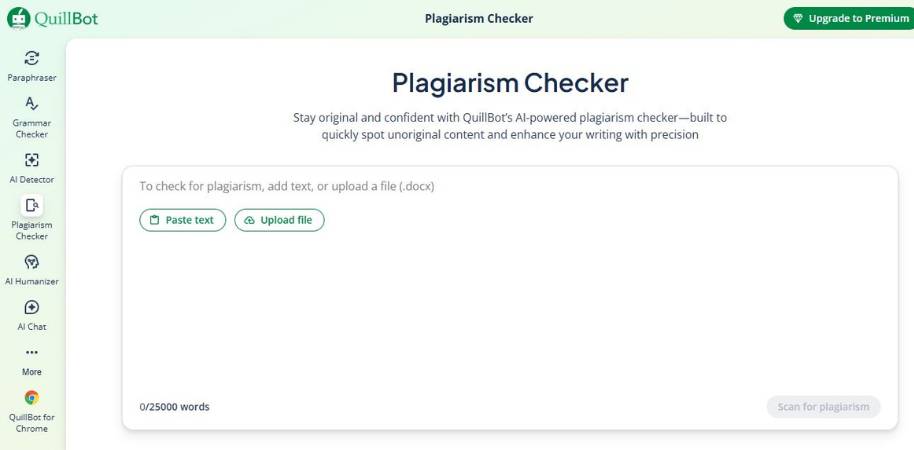
The QuillBot Plagiarism Checker will look for matches of your text in other sources across the internet. QuillBot’s Plagiarism Checker will compare your text against blogs, articles, books, and academic papers to identify any similarities. Have you ever been unsure whether you might have unintentionally plagiarized a sentence or two? Well, the QuillBot Plagiarism Checker helps you find out if you did or didn’t. Here are some of the Plagiarism Checkers Main Features:
- Scan: When you run the Plagiarism Checker, your text will be scanned against millions of web pages, books, and academic papers, and you will be informed if any text has been copied.
- Similarity Report: The QuillBot Plagiarism Checker will give you a similarity report after you run the scan, which will display a percentage of how much of your text is identical to other text.
- Highlighted Sources: Any matching sources of the text will be highlighted, and you will be given links to the sources where similar or identical phrases were found.
- Other Editing Tools: The QuillBot Plagiarism Checker works in tandem with other editing tools like the Paraphraser, Grammar Checker, and Summarizer.
The QuillBot Plagiarism Checker is quite user friendly and easy to use, especially if you are already familiar with other QuillBot tools. The Plagiarism report is also easy to read and understand. I personally like the QuillBot Plagiarism Checker because it is fast and easy to use. If you like to double-check your content before publishing it, I think you will find the QuillBot Plagiarism Checker to be a great tool to do so.
8. Paperpal
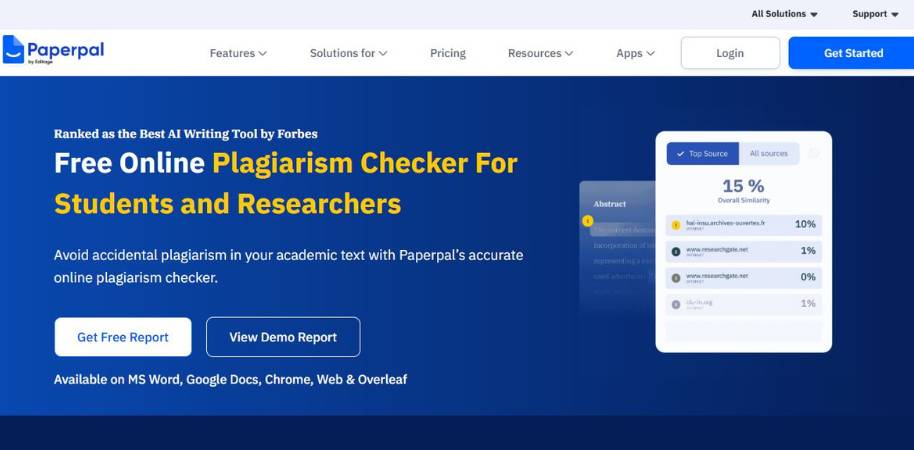
Paperpal Plagiarism Checker is a plagiarism detection tool that is primarily designed for academic and research-based content. However, it can be used by any user who writes lengthy articles or documents. The tool checks the document against a massive collection of academic sources and online content to find any instance of plagiarism. If you’re concerned that your research may match with someone else’s content, this tool will help you to identify it before it is sent to a reviewer. Here’s a rundown of the features of Paperpal Plagiarism Checker.
- Checks against academic databases and online sources. This feature is useful for academic and research-based documents. A high similarity index can raise some serious concerns.
- Provides a similarity index report that contains links to matching sources. This feature allows users to check the sources that contain similar content and revise the document accordingly.
- Highlights potentially similar sentences and phrases. Users can quickly identify and modify potentially plagiarized content using this feature.
- The tool is part of a suite of editing tools. The Paperpal suite contains grammar, clarity, and research editing tools.
Paperpal Plagiarism Checker is a useful tool for writers who want to check their content for potential plagiarism, especially academic sources. While the suite of editing tools is designed to cater to the needs of research writers, it can also be used by any writer that has to work with long documents. Overall, I am impressed with the features and functionalities of the Paperpal Plagiarism Checker tool. I particularly like the fact that it highlights potentially similar sentences and phrases. This feature will help writers to quickly identify and modify potentially plagiarized content. It also saves time and effort in the process.
9. UnGPT
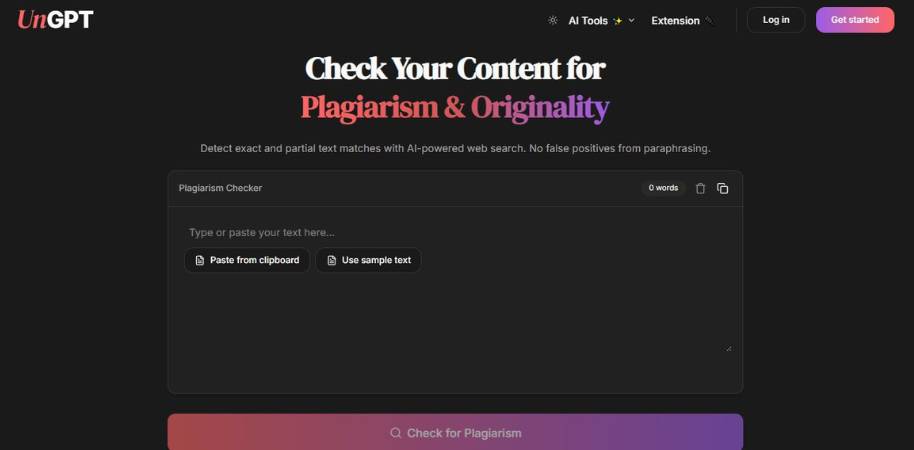
UnGPT provides a plagiarism detection tool that enables authors to check their articles for plagiarism before publishing them on the web. This tool checks for similarity of the submitted content with existing content available on the web and if it finds any portion of the content similar to an existing one, it notifies about it. Along with plagiarism detection, this tool also detects if the content has been written using any AI tool, and that’s quite obvious as we are talking a lot about this tool these days.
Main Features of UnGPT Plagiarism Checker
- Detects Plagiarism This tool checks for the similarity of the submitted content with existing content available on the web. If it finds any portion of the content similar to an existing one, it notifies about it.
- Detects AI-Generated Content As mentioned earlier, this tool also detects if the content has been written using any AI tool.
- Highlight Similarity This tool highlights the portion of the content that it finds similar to existing ones.
- Fast Plagiarism Checker The tool doesn’t contain any complicated interface and provides fast plagiarism checking results.
Final Words
UnGPT’s plagiarism detection tool is a nice tool to check the originality of the content. This tool not only detects plagiarism but also detects AI-generated content. I liked the user interface of this tool which is very simple and easy to use. If you are a regular publisher and want to check the originality and credibility of the content before publishing it on the web, this tool is a good option to consider.
Why Publicists Should Care About Plagiarism in the Digital Age
When you work in public relations, life comes at you fast. You’re writing a press release one minute and editing a pitch at midnight with a cup of cold coffee by your side. It’s simple to miss something, such as a sentence that reads a bit too closely to another sentence you’ve read before. But the Internet doesn’t miss a thing.
Everything you write ends up online these days, where it stays … well, pretty much forever. And it takes a reporter, a reader or an opponent mere seconds to find instances of duplicated text.
When that happens, it’s not only embarrassing, it also starts to erode trust. Did you copy and paste on purpose or did you just get careless? Either way, your credibility takes a hit.
Because in public relations, that’s what we trade on. In fact, authenticity is one of the things publicists sell. If your talking points sound like everyone else’s talking points, your client ends up sounding like everyone else’s clients. My advice? Slow down and rephrase. It’s always easier than explaining why two things sound almost exactly alike.
Key Benefits of Using AI Plagiarism Checkers in PR Workflows
Let’s be real, PR isn’t always pretty. Sometimes, it’s an all-hands-on-deck situation in which you find yourself facing a mountain of deadlines, drafts, and at least one person who urges you to “Just send it already!” It’s easy to see how, in the moment, verifying the originality of your content could be viewed as just one more step. But here’s the thing, it really does make everything easier. Less time stressing about what might happen, and more time focusing on what needs to be done.
A Busy Writer’s Best Friend
Are you ever in the middle of hitting “send” when you’re suddenly hit with a crisis of confidence? Did I miss something? Was it original enough? That’s where plagiarism detection comes in. By running a quick test, you can identify any similar phrases or passages before a journalist or client does. It’s a minute of your time that could save you hours of aggravation down the line. It’s time to ditch the guesswork and know for a fact whether or not you need to make a few last-minute tweaks.
Smooth Sailing in the Editing Process
For any writer, there’s nothing worse than reading over your own work and thinking, “This sounds familiar.” By running it through a plagiarism tool, you know that if it’s too close to someone else’s writing, it will be flagged for your attention. Easy.
It’s All About Preserving the Tone of Your Brand
Think of it this way, the goal of a good PR firm is to not only communicate important information but also do so in a way that preserves the unique tone and voice of the brand. When you keep your copy original, you help to ensure that the voice behind your content always remains authentic and genuine. In the end, it’s that voice that your customers will remember.
Features to Look for in a Reliable AI Plagiarism Checker
You might think finding a plagiarism detection tool would be easy. However, when you begin searching, you will find that there are many options on the market, each claiming to deliver the same results, only faster and more accurate. Which features are most important? Based on my experience, here are a few of the must-haves.
Clear Similarity Reports
It’s important that any report is easy to read and understand. If the results look like a complicated matrix, you won’t use the tool. A good tool will clearly indicate where the plagiarized content was found and the extent of the plagiarism. It should be simple and to the point, without requiring you to play Sherlock Holmes.
Deep Content Scanning
The tool you choose should have the capability of scanning through massive amounts of web content to find sentences, paragraphs or entire articles that are similar. If not, there is really no value to the tool.
Helpful Editing Insight
A great plagiarism detection tool will not only let you know when you have plagiarized, but will also aid in the editing process. You should be able to see the suggested edits and simply replace the offending sentence. Frankly, anything that can make my job easier during a crazy PR deadline is a plus in my book.
Conclusion: Protecting Your Reputation with Smarter Content Checks
The world of PR can be a delicate balancing act. Misplace one word, allow a paraphrased sentence to sneak its way into a press release, and the next thing you know, you’re not reading about your client or their organization in the newspaper, you’re reading about the gaffe. That’s probably not the kind of coverage you’re looking for. I can tell you that.
Reputation matters
Credibility and reputation go hand in hand, and they’re both incredibly easy to impugn. Consumers can tell when language has been lifted from somewhere else. When they read something original, they engage more fully with the content. When they read something that has clearly been repurposed, or copied and pasted from somewhere else, they can tell. They’ll back off. It’s not always easy to quantify, but you can sense when it’s happening. PR specialists understand that it takes years to build and about five minutes to dent.
The value of editing
It’s not exactly the sexiest thing in the world to edit and re-edit copy before it’s released to the public. No one is going to give you a prize for it. But it’s necessary. You should think of editing as a kind of gut check. Does the language we’re using sound like our brand’s voice? If the answer is yes, then you’re in the clear. If the answer is no, then you need to go back to the drawing board and try again. That’s the best way to protect your brand. That’s just the way it is.


