

It turns out, AI has already come to work, quietly, and is helping with day to day tasks. While it was a panel discussion topic a couple of years ago, and a late-night debate on whether machines would “take over creativity,” it is now being used to write reports, code reviews, product descriptions for an e-commerce site at 11 pm when the entire marketing team is half asleep. It’s not dramatic, but it’s definitely changing how things get done.
Table of Contents
And when businesses started using AI, they began to wonder, what is the size of the Generative AI market? Where is all the money going? Is this just another tech boom that will cool off, or something bigger?
In this article, we will discuss the Generative AI market size statistics for 2025 and beyond, along with growth, revenue, industry penetration, and predictions for the coming years. Some of these statistics are astonishing, while others are controversial. Nonetheless, they give us an idea of a market that is moving at an incredible pace.
1. Generative AI in 2025: The Key Numbers Everyone Is Watching
But something strange happened on the road to the future. Generative AI became normal. It wasn’t some deep revelation in a Hollywood movie. It was just part of the day’s work. You’re using AI to create an email at one point, and the next half of your work is something you didn’t even realize could use AI.
Maybe you saw it coming. More than 16% of the world used generative AI in 2025. That means over 1.3 billion humans interacted with an AI system. That’s according to a report from the Microsoft AI Economy Institute. To be honest, that might even be a low number. I’m sure there are lots of people who don’t even realize they are using AI. (Recommendation algorithms, writing tools, chatbots, etc.)
This was not the case even two years ago. Then, there was still talk that maybe AI wouldn’t be that useful in the workforce. Today, the question is how did we ever get by without it.
The Dollars Behind the Tech
When a technology grows as fast as generative AI has, money usually follows. In this case, we aren’t talking about a trickle.
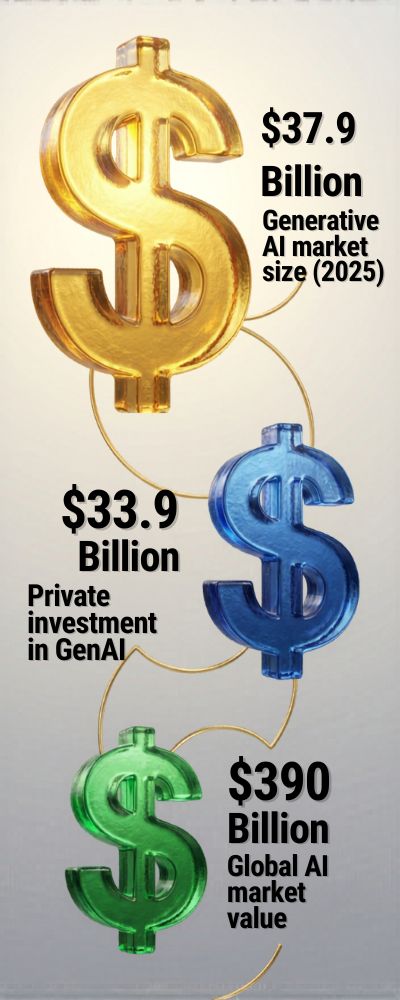
The global generative AI market was valued at approximately $37.9 billion in 2025, according to a report from Precedence Research. Private investment and venture capital have also poured into the industry. In 2025, $33.9 billion in venture capital and corporate investment flowed into generative AI companies, according to the Stanford AI Index Report.
| Metric | 2025 Estimate |
|---|---|
| Generative AI market size | $37.9 billion |
| Private investment in GenAI | $33.9 billion |
| Overall AI market value | ~$390 billion |
But companies are actually coming on board even faster than people
The McKinsey State of AI survey found that 78% of companies now use AI in at least one business function, up sharply from 55% just a year before. More interestingly: 71% of companies reported using generative AI in particular, for everything from marketing content to software development to research to automation of internal processes.
| Enterprise Adoption | Percentage |
|---|---|
| Organizations using AI | 78% |
| Organizations using generative AI | 71% |
| Companies increasing AI investment | 85% |
The Slightly Awkward Reality Nobody Mentions
Here’s where things get a little messy.
Despite the massive investment and excitement, only a relatively small percentage of companies say they’re seeing significant financial returns from AI so far, according to industry analysis.
That doesn’t mean the technology isn’t transformative. It probably just means organizations are still figuring out where it fits best. New technology tends to work like that. The early internet had the same awkward phase before everything suddenly clicked.
So the real story of generative AI in 2025 isn’t just about explosive growth. It’s about a technology that’s rapidly becoming normal—and we’re still learning how to use it properly. And if the current numbers are anything to go by, this learning curve isn’t slowing down anytime soon.
2. How Large Is the Generative AI Market Today? A Closer Look at the Latest Data
Everyone I know is wondering the same thing these days: how massive is generative AI? No, not the media coverage. The market. How big is it, really? As of 2025, the global market for generative AI was valued at around $37.9 billion, according to Precedence Research. While that’s already a pretty significant number, the really astounding figure is the market’s expected growth rate.
At its current rate of adoption, Precedence projects the generative AI market will balloon to nearly $1 trillion by the mid-2030s. To be frank, I find that a little hard to believe. It wasn’t that long ago that we were still determining whether AI could reliably write a coherent email, never mind an entire novel or movie script. But I digress.
Investment Is Pouring In
If there’s one takeaway from these statistics, it’s that investors aren’t holding back. In 2024, private investors plowed $33.9 billion into generative AI startups alone, according to the 2025 Stanford AI Index Report. That makes generative AI one of the most rapidly expanding tech sectors out there.
| Metric | Latest Estimate |
|---|---|
| Generative AI market size (2025) | $37.9B |
| Private investment in GenAI | $33.9B |
| Global AI market value | ~$390B |
Investments of that magnitude are generally indicative of faith in the longevity of the technology. Not all those investments will be returned on, but investors don’t seem to think generative AI is going away anytime soon.
Where the Growth Is Actually Happening
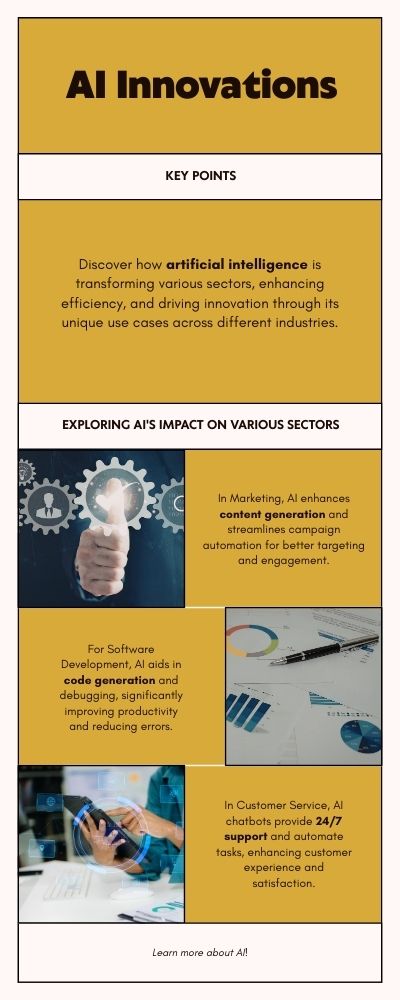
While the market as a whole is growing, it’s not growing uniformly across all verticals. Some industries have been quicker to adopt the technology than others. Certainly, right now, software development, marketing, and customer support are out front, because these models are very good at generating text and code and can readily be deployed as chatbots.
A report by McKinsey on the State of AI found that 78% of companies have now deployed AI in at least one business function, and many of those implementations are of generative AI.
| Sector | Key Use Cases |
|---|---|
| Marketing | Content generation, campaign automation |
| Software development | Code generation, debugging |
| Customer service | AI chatbots and support automation |
| Research | Data analysis and summarization |
It makes sense when you think about it. Generative AI excels at tasks that involve information processing or generation that need to be done quickly.
The Bigger Picture: Still Early Days
Despite billions in investment, the generative AI market is still in a relatively early phase. Companies are testing, learning, and, we’ll just say it, stumbling a little.
According to a report highlighted in Business Insider, only a small minority of companies have seen significant financial benefits from AI yet.
It’s not surprising, given the newness of the technology. The rise of the internet followed a similar arc: hype, confusion, and then, eventually, huge impact.
If the investment picture continues on its current trajectory, generative AI may be one of the biggest technology markets of the next 10 years. And the totals today? Just the beginning.
3. What’s Driving the Rapid Growth of the Generative AI Industry
All of this happened for a reason. A few stars aligned just at the right time: computing power, large datasets, and the value proposition of automation in the business world.
In fact, the rate of adoption alone offers some insight. According to the McKinsey State of AI report, 78% of organizations now use AI in at least one business function, compared with just 55% the previous year. When nearly four out of five companies start experimenting with the same technology, you start to get some momentum. And once you have momentum, well, things happen fast.
Massive Investment Is Fueling the Industry
Money is flowing into generative AI at a speed that even battle-hardened Silicon Valley investors are surprised by.
The Stanford AI Index Report estimates that private investment in generative AI reached about $33.9 billion in 2024, a huge jump from previous years. And it isn’t just investors funding startups, large technology companies are investing billions in infrastructure and training models.
| Investment Indicator | Latest Estimate |
|---|---|
| Private GenAI investment | $33.9B |
| Global AI market value | ~$390B |
| Forecast generative AI market (2030+) | Hundreds of billions |
The simple answer? We’re witnessing the next big platform transition, on par with mobile or cloud.
Productivity Is a Big Factor
But there’s a much less sexy force at play too: productivity.
Generative AI can create reports, generate marketing copy, summarize research, and even write software. According to a survey by Deloitte , 85% of organizations are ramping up their investments in AI technologies, largely because they believe automation will help them work more efficiently and lower operational costs.
| Business Use Case | Typical Impact |
|---|---|
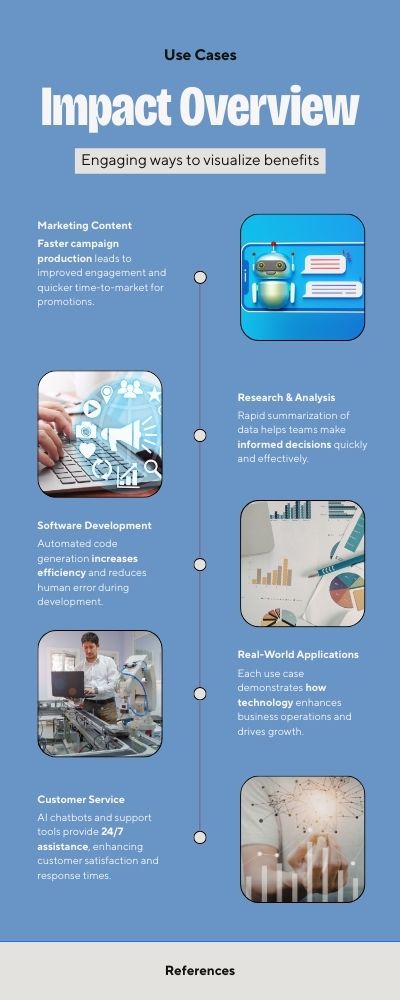
| Marketing content | Faster campaign production |
| Software development | Automated code generation |
| Customer service | AI chatbots and support tools |
| Research & analysis | Rapid summarization of data |
Cloud platforms play a big role here. Instead of building their own AI systems from scratch, companies can simply access models through APIs. This accessibility has lowered the barrier to entry dramatically. A report highlighted by Business Insider notes that cloud-based AI services have expanded rapidly as organizations adopt generative models at scale.
The Real Reason Growth Keeps Accelerating
Here’s the interesting part. Growth isn’t happening because everyone fully understands generative AI yet. In many cases, companies are still experimenting. But when a technology can potentially reshape productivity, creativity, and decision-making all at once, people don’t wait around for perfect clarity. They jump in and figure it out along the way. That curiosity, mixed with competition and a lot of investment, is probably the biggest driver of all.
4. Where the Money Is Flowing in Generative AI Across Different Industries
Generative AI is getting lots of investment, but money isn’t distributed equally. Some sectors are deep-diving, while others are still just testing the waters.
First, the sheer amount of funding. The Stanford AI Index Report estimated private investment in generative AI in 2024 was approximately $33.9 billion, making it one of the fastest-growing technology areas. With that amount of investment, it’s no secret that it doesn’t distribute equally. Money will flow to areas where people think they can make a return.
Today, a few sectors are clearly in the front row.
Technology and Software is the Winner
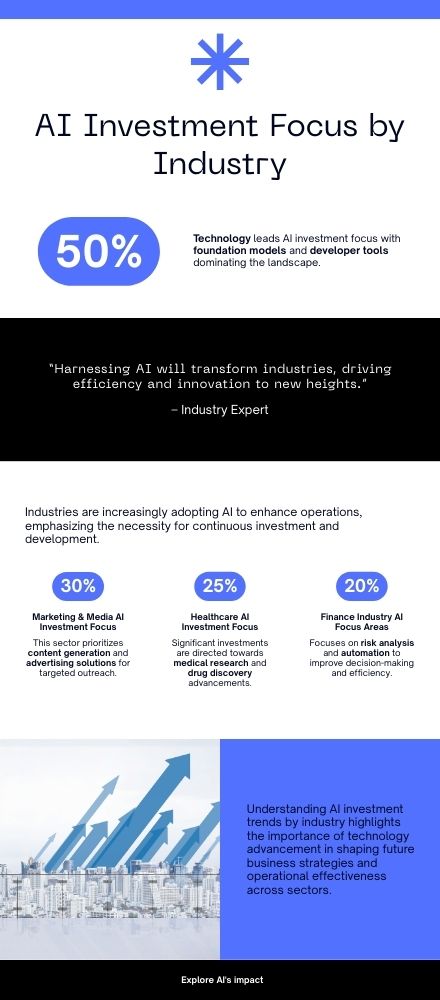
Unsurprisingly, the technology sector is also taking the biggest chunk of investment.
Big tech companies are investing in foundation models, AI infrastructure and developer tools. Startups are receiving venture capital for building AI-enabled applications and platforms.
According to McKinsey’s State of AI report, software development is the most prominent use case for enterprise in terms of generative AI, especially for automated coding, debugging and documentation.
| Industry | Key AI Investment Focus |
|---|---|
| Technology | Foundation models, developer tools |
| Marketing & media | Content generation, advertising |
| Healthcare | medical research, drug discovery |
| Finance | risk analysis, automation |
The reason is straightforward. Those who develop the instruments get to play in the initial phase of investment.
| Industry | Key AI Investment Focus |
|---|---|
| Technology | Foundation models, developer tools |
| Marketing & media | Content generation, advertising |
| Healthcare | medical research, drug discovery |
| Finance | risk analysis, automation |
Media and Marketing Are Moving Fast
The other industry that’s receiving a lot of investment is media and marketing. Generative AI excels at creating text, images, and videos, the very resources these industries utilize.
According to market research conducted by Precedence Research, content generation tools are some of the fastest-growing generative AI applications, especially in the advertising and digital marketing space.
Agencies are playing around with AI-generated campaign ideas, automated copywriting, and image generation. Some marketers enjoy the speed. Others are concerned about the creativity getting a bit… well, robotic.
Both responses are likely valid.
Healthcare and Finance Are Investing Cautiously
Healthcare and financial services are investing big as well, but more conservatively. Regulations tend to make things slower, and that isn’t always a bad thing.
As per insights shared by Business Insider , AI applications in healthcare, specifically in drug discovery and medical research, are receiving increased investments from startups and pharmaceutical companies alike.
The finance industry is looking at automation and risk analysis. Banks are exploring AI for fraud detection, document processing, and customer support systems.
| Sector | Typical Generative AI Applications |
|---|---|
| Healthcare | research summarization, drug discovery |
| Finance | fraud detection, automated reporting |
| Marketing | AI-generated content |
| Technology | AI platforms and infrastructure |
The Larger Context
Money usually follows utility. The industries that can leverage generative AI immediately, software, marketing, and digital services, are witnessing the first few rounds of investments.
However, the narrative is still unfolding. Several industries are exploring behind the scenes, trying to determine where AI truly adds value.
And as history dictates, the industries that are being cautious today may end up being the ones that move the fastest tomorrow once the technology is mature.
5. The Companies Shaping the Generative AI Landscape
Generative AI can often seem like a dark magic propelling Silicon Valley innovation. But in reality, it’s a relatively small number of companies pushing the tech forward, some of them quite old and others quite new.
Much of the activity is driven by foundation model companies, which create the massive AIs that underpin chatbots, programming assistants and image-generating algorithms. According to the Stanford AI Index Report, private funding for generative AI startups hit $33.9 billion in 2024, which is a proxy for how much the industry is pouring into the sector.
That money often goes into a handful of companies.
The Big Companies Building the Infrastructure
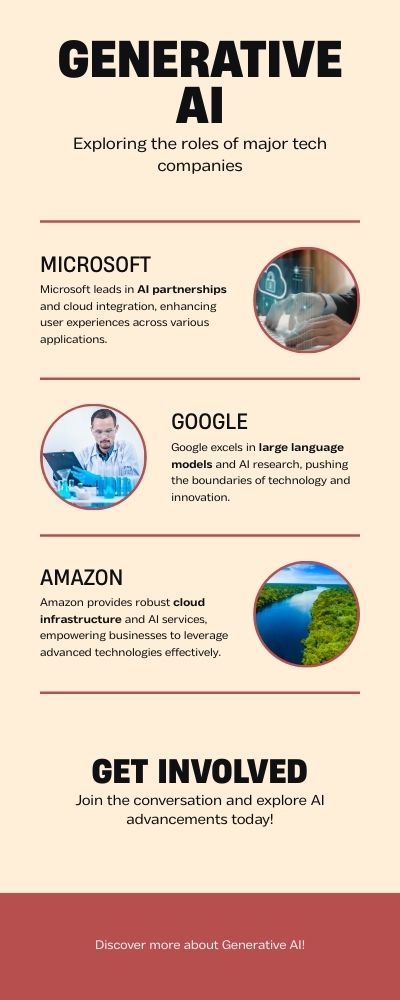
The big tech companies are some of the biggest players because they own infrastructure. Training massive AI models requires computing muscle, specialized chips and cloud computing platforms. Microsoft, Google and Amazon have already spent billions on AI and cloud infrastructure.
The McKinsey State of AI report said 78% of companies now use AI for at least one function, many of them running on cloud services operated by the big tech companies.
| Company | Role in Generative AI |
|---|---|
| Microsoft | AI partnerships, cloud integration |
| large language models, AI research | |
| Amazon | cloud infrastructure and AI services |
Their approach is simple: they build the platforms on which all the other companies are based.
AI Labs and Startups Fasten the Seatbelts On!
In addition to the Big Tech companies, there are several AI labs and startups moving forward at breakneck speed. They are working on the generative models themselves, that is, the systems that generate text, images, video, or code. Many of them have received significant investments from venture capitalists and other investors.
According to a study of research conducted by Precedence Research, the market for generative AI could reach tens of billions of dollars in the next few years, largely due to companies that are building new AI applications and platforms.
| Type of Company | Contribution |
|---|---|
| AI research labs | developing foundation models |
| Startups | specialized AI applications |
| Tech platforms | infrastructure and distribution |
These smaller companies tend to be more agile and willing to test concepts that the larger companies might be hesitant to attempt.
Collaboration Is Becoming the Norm
Something interesting is happening in this space: partnerships are abundant. Large tech companies are often partnering with AI startups that bring research advances to the table but rely on the cloud services and reach that larger companies can offer.
A report referenced by Business Insider explains how these partnerships are helping to bring new generative AI tools to market. In other words, the industry is not only competitive, it’s also intertwined.
The Landscape Is Still Evolving
While it’s true that a small group of companies are grabbing most of the attention right now, the landscape of generative AI is far from fixed. Startups are emerging on a regular basis, researchers are announcing new discoveries, and companies are exploring new uses.
In fact, the list of “players” in the space could look quite different in a couple of years. This is the reality of emerging technologies: Today’s top dog could easily be tomorrow’s also-ran.
6. The Rise of Generative AI Startups and the Investment Behind Them
You may have noticed something odd in tech over the past year. About every month, but sometimes every week (or even every day), there’s a new generative AI startup in the news. Generative AI for writing, for coding, for video, for research, and so on.
The obvious question is, is anyone actually funding all this?
They definitely are. According to the Stanford AI Index Report, in 2024, private funding of generative AI startups totaled around $33.9 billion, one of the fastest increases we’ve seen in AI funding ever:
33.9 billion in funding isn’t just random
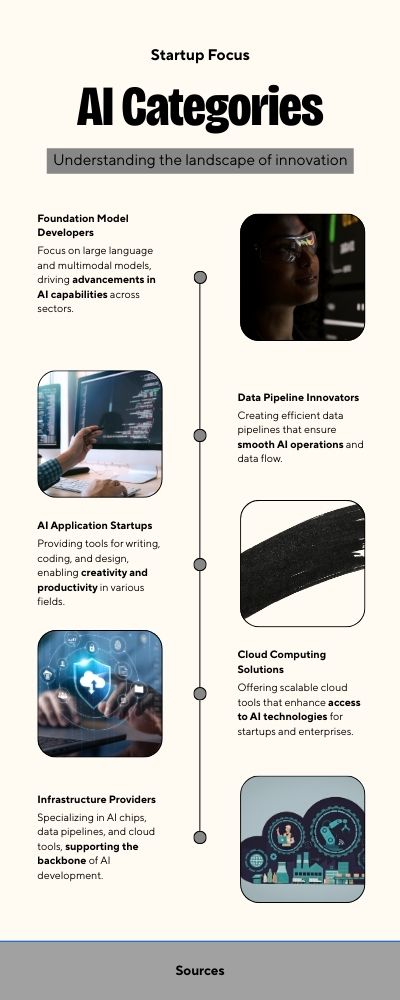
That money is going to startups because investors think those startups might become the next tech giants. So where is all the money going? Obviously, not all AI startups do the same thing. Some are working on enormous foundation models, and others are working on smaller applications that sit on top of them.
According to market research from Precedence Research, the total size of the generative AI market was something like $37.9 billion in 2025, with a big chunk of that coming from startups:
| Startup Category | Focus Area |
|---|---|
| Foundation model developers | large language and multimodal models |
| AI application startups | tools for writing, coding, design |
| Infrastructure providers | AI chips, data pipelines, cloud tools |
What’s fascinating is that many of these smaller companies aren’t attempting to go toe-to-toe with the tech titans. Rather, they’re developing nifty solutions that integrate with AI platforms.
Venture Capital Is Moving Fast
VC firms have been particularly busy in this field. In fact, generative AI is now one of the hottest investment themes in tech.
Data cited in the CB Insights Generative AI Trends report reveals that hundreds of generative AI companies have raised funding in the last few years, from seed rounds to multi-billion valuations.
| Funding Indicator | Latest Estimate |
|---|---|
| Private GenAI investment | $33.9B |
| Number of funded GenAI startups | Hundreds globally |
| Typical early-stage funding | $5M–$50M |
That’s a lot of deals, and it implies that investors aren’t just placing bets on one or two companies; they’re investing broadly across the ecosystem.
Startups Can Move Faster
The one thing startups can often do is move faster. While big tech companies invest in underlying infrastructure and far-off research, smaller companies play around with specific applications.
According to data analyzed by Business Insider, a lot of these generative AI startups are focused on specific markets, such as research assistants, AI design tools, or specialized business software.
Some of these products work out. Some languish and die. That’s the way the startup world works.
The Question in the Back of Everyone’s Mind
But there’s a question that underlies all this investment: will any of these startups actually become a real business?
Sure, probably not. In fact, history would say probably just a small handful of these startups will make it in the long run. But when a new platform technology emerges, as generative AI has, investors are willing to take that risk.
For now, the startup ecosystem around generative AI is growing. And going by the rate of funding, the next big thing in AI may not come from the biggest tech companies; it may come from a small startup, working on something crazy.
7. Where Generative AI Is Growing the Fastest Around the World
While generative AI adoption is relatively widespread around the world, there are some markets that are more prominent than others. But, what’s the reason for this disparity? Well, it all comes down to a combination of funding, expertise and a little bit of rivalry. No nation wants to be late to the AI party!
The 2025 AI Index Report by Stanford reveals that the United States is leading in the global AI funding and model development landscape, boasting the highest number of generative AI models developed, as well as securing the lion’s share of private investments in the AI space. Much of this can be attributed to the country’s powerful venture capital industry.
North America: Still the Powerhouse
As you might expect, the United States and Canada are still leading the charge when it comes to generative AI adoption. From big tech, venture capital and universities, a lot is happening north of the border. According to the McKinsey State of AI report, North American businesses are some of the most active adopters of AI solutions, with software development, finance and digital services being some of the front-runners.
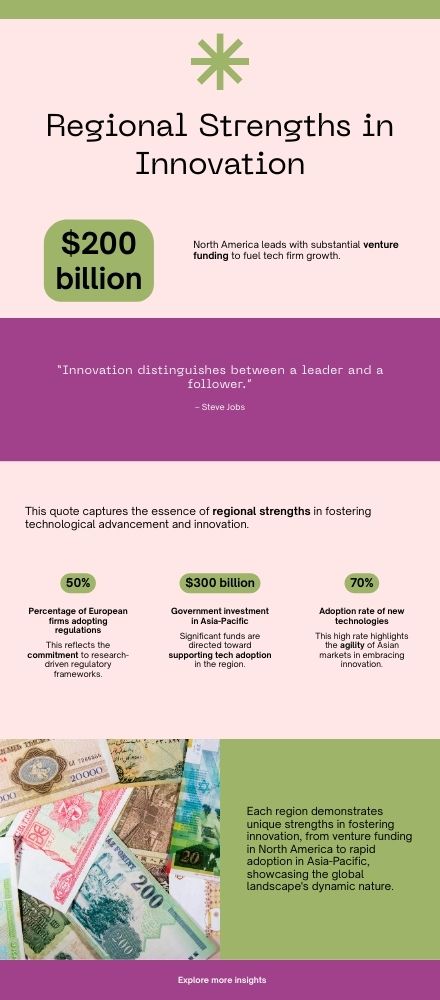
| Region | Key Strength |
|---|---|
| North America | Venture funding and major tech firms |
| Europe | research and regulation |
| Asia-Pacific | rapid adoption and government investment |
But there is also a cultural element. Companies in the U.S. tend to move fast and try things out, and that can speed up adoption.
Asia Pacific: Fastest Growth
But while North America is number one for funding, the Asia Pacific region is fast catching up for adoption. China, South Korea and Singapore are all making big investments in AI research, infrastructure, and education.
According to research from Precedence Research, the Asia Pacific region could see the fastest rate of growth in the generative AI market over the next ten years. Government support is a key factor. Many Asian governments have introduced national AI strategies designed to help speed up technological advancement.
| Country | Focus Area |
|---|---|
| China | AI research and large-scale deployment |
| South Korea | AI chips and robotics |
| Singapore | AI startups and digital services |
Sometimes policy follows technology. Sometimes policy precedes technology. When policy precedes technology, it is almost always a bad sign. In this case, it might be a good sign.
Europe: A Different Animal
Europe is a different animal. The generative AI ecosystem there isn’t as brash or frenetic as in the US. But it exists. For starters, Europe is home to some of the best AI research labs in the world, and that is beginning to spawn startups.
According to documents seen by Business Insider, European AI startups have been attracting increasing investment in recent years, especially in the UK, France, and Germany. And if you walk around the startup ecosystem in London, Paris, and Berlin, you see much the same thing: People fiddling with AI tools, building small applications, trying to find their niche in the market. Europeans love their regulations, of course.
There’s a lot of rhetoric about ethics, and safety, and governance, and more. Some people say that such thinking stifles innovation. Perhaps. But others say that better safe than sorry. It is too early to say who will be ultimately vindicated, but you cannot say Europe is not being cautious.
The Global Movement
The remarkable thing about generative AI is that it has become a global movement. Only a few years ago, nearly all the action was in Silicon Valley. That is no longer true. There is innovation underway all over North America, Europe, and Asia, all at the same time. Each region has its own distinct character.
North America has deep venture capital pockets and giant tech companies. Europe has excellent academic research and a cautious regulatory attitude. Asia has government support and a willingness to move fast. Taken together, the generative AI boom begins to feel less like a technology fad, and more like a global race.
Not quite a free-for-all, but something more like a marathon, where everyone is still writing the rulebook as we go. And to be clear, this still feels like Act I.
8. How Companies Are Using Generative AI in Real-World Business Today
The “cool demo” phase of generative AI is over. Today, enterprises are figuring out how to integrate it into their workflows. It’s amazing how quickly this has happened. A year or two ago, we were wondering if AI could write copy for marketing campaigns. Last year, we were quietly deploying it to write reports, meeting summaries, and even code.
According to the McKinsey State of AI report, 78% of companies are now using AI in at least one business function, and 71% are using generative AI. This has happened incredibly quickly, and to me, that just goes to show how useful these tools really are. Ask around, and inside an organization, you’ll hear the same thing: once workers find that AI saves them a couple of hours, they never look back.
Marketing and Content Creation
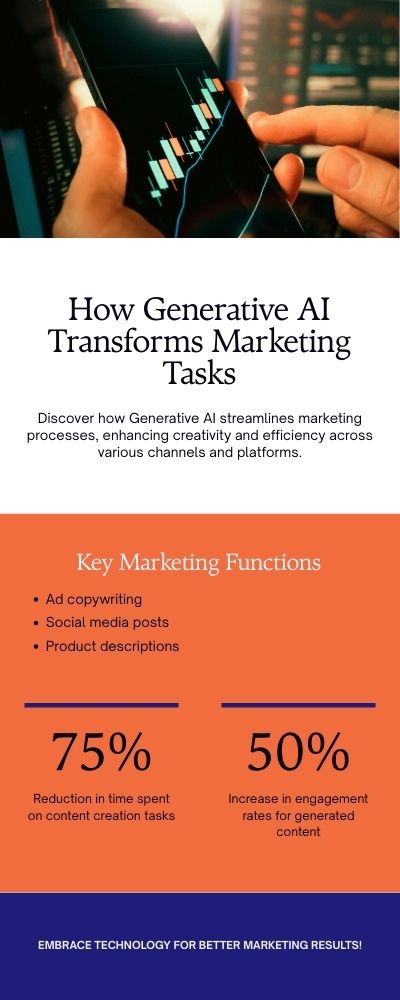
Generative AI early adopters have been in the marketing and content creation space, and that’s no surprise. Marketers are producing content all day, every day: emails, ads, product descriptions, social media posts, and so on. Research by Precedence Research indicates that content generation is one of the fastest-growing use cases for generative AI, particularly in digital marketing and advertising.
| Marketing Task | How Generative AI Helps |
|---|---|
| Ad copywriting | drafts campaign messages |
| Social media posts | generates content ideas |
| Product descriptions | automates e-commerce listings |
| Market research summaries | condenses reports quickly |
Does AI replace marketers? No. Most teams still use human writers and editors. Consider it more like an idea generator that never depletes the coffee fund.
Software Development and IT
Software developers are heavy users of generative AI. From coding to debugging to providing context for technical documents, there are a lot of areas where AI can truly accelerate these tasks.
As referenced in the Stanford AI Index Report, software development is one of the top use cases for generative AI in the enterprise in 2025, mostly in the form of AI-enabled coding tools.
| Development Task | AI Application |
|---|---|
| Code generation | suggesting functions and scripts |
| Debugging | identifying potential errors |
| Documentation | summarizing technical material |
As one developer put it, it’s less automation and more “pair programming with a very fast assistant.”
Customer Support and Internal Operations
Generative AI is also being used to tackle support requests. Chatbots are being used to answer frequently asked questions from customers, and tools are being built to help employees search for information more efficiently.
According to a survey highlighted in this article by Deloitte, 85% of companies are looking to expand their use of AI, in large part for its ability to help automate repetitive work and enhance productivity.
| Business Area | AI Use Case |
|---|---|
| Customer service | automated chat and support |
| HR | resume screening and onboarding docs |
| Finance | report generation and analysis |
The Human Side of Adoption
While there’s a lot of discussion around automation, the majority of businesses aren’t automating humans. Instead, they are automating the drudge work, the repetitive tasks that tend to drag everyone down.
This could be a reason for the adoption growth. If AI makes people more efficient, without removing the fun parts of work, it’s more likely to stick around. And based on the current data, generative AI is doing that quite well.
9. How Generative AI Is Changing Jobs, Productivity, and the Way We Work
Generative AI has generated a lot of sensational headlines about the end of work as we know it. Some claim that many jobs will be automated. Others assert it will be no different than any other productivity tool in the workplace, like a spreadsheet or a search engine. As always, the truth likely falls in between.
But one thing is true: people are working differently. The McKinsey report on the economic potential of generative AI estimates that the technology can contribute between $2.6 trillion and $4.4 trillion per year to the global economy in productivity gains.
That’s a staggering figure, and most of it comes from getting work done more quickly, not from eliminating jobs altogether. If you ask the workers who use these tools every day, you’ll mostly hear something straightforward: “It saves me time.” That might not sound spectacular, but it’s enormous.
Productivity Is the Big Story
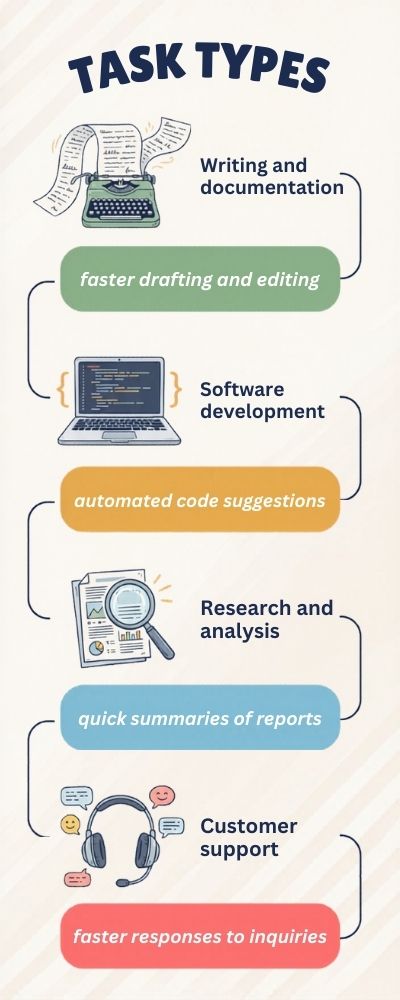
Generative AI excels at mundane knowledge tasks, like summarizing a document, drafting an email, analyzing a contract, or responding to a question. Research cited in the Stanford AI Index Report finds that workers equipped with generative AI tools can perform certain tasks much more speedily, especially in occupations that involve writing, research, or coding.
| Task Type | Productivity Impact |
|---|---|
| Writing and documentation | faster drafting and editing |
| Software development | automated code suggestions |
| Research and analysis | quick summaries of reports |
| Customer support | faster responses to inquiries |
The fascinating thing is that the most significant productivity gains will be realized by non-experts. AI can assist novice workers to become productive more quickly.
Some Occupations Will Be Impacted More Than Others
Naturally, not all occupations will be impacted equally. Occupations that involve mostly text, numbers and digital media are likely to be impacted first and foremost.
A report referenced by Goldman Sachs suggests that roughly two thirds of occupations may be impacted by some level of automation enabled by generative AI, although the majority of occupations will be impacted partially, not completely.
| Job Category | AI Impact |
|---|---|
| Marketing & content | AI-assisted content creation |
| Software development | coding assistance tools |
| Customer service | AI chatbots and automation |
| Research roles | faster data analysis |
Most of the time AI eliminates the routine work that nobody really wanted to do in the first place.
The Workplace Is Becoming More Collaborative (Strangely Enough)
Interestingly, generative AI can make the workplace more collaborative. Rather than automating workers, it’s often used as a hyper-speedy collaborator.
As a result, companies are planning to pour even more money into AI tools. According to a recent survey from Deloitte, 85% of organizations are planning to increase investment in AI tools, but not to replace workers. Instead, they want to boost productivity and decision-making.
That might mean humans spend less time formatting reports and writing emails and more time strategizing, creating, or solving problems.
The Adjustment Period
There’s always a bit of an awkward transition when new tools are introduced. They can wreck workflows and require a brief period of experimentation to figure out.
Yet, technologies that make people truly more productive tend to stick around. It seems like generative AI is on a similar path. Not to replace human workers, but to subtly redefine the way humans work.
10. Generative AI Market Forecast: What the Industry Could Look Like by 2030
It’s not easy to project where the field of generative AI will go, much like it wasn’t easy in 1998 to project how important the internet would become.
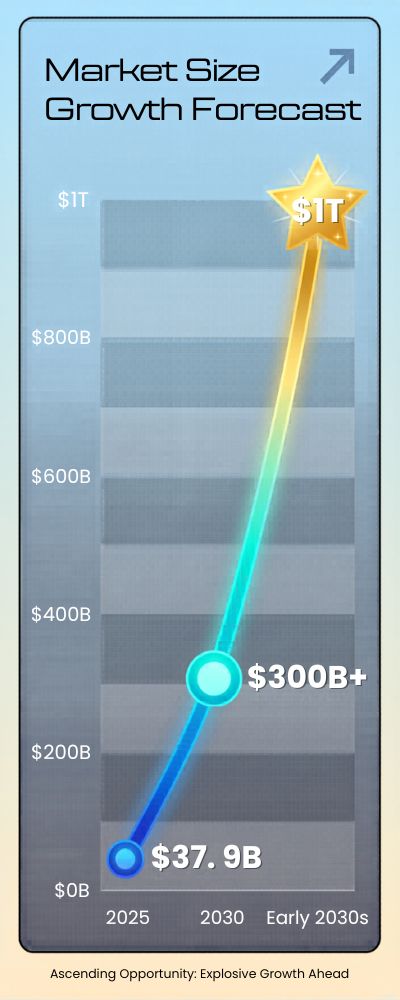
But market researchers are taking a stab at it: By 2030, at current rates of adoption, the market for generative AI will balloon to $328 billion, from about $37.9 billion in 2025, according to Precedence Research, and in the early 2030s it could approach $1 trillion.
| Year | Estimated Market Size |
|---|---|
| 2025 | ~$37.9 billion |
| 2030 (forecast) | $300B+ |
| Early 2030s | Up to ~$1 trillion |
That growth rate is significant. It can only happen if some core changes are underway in the market, and there are indications they are.
Enterprise Adoption Is Still Accelerating
Enterprise adoption is a big part of the story. Companies are just adopting AI faster than expected. In a recent report on the State of AI, consulting firm McKinsey found that 78% of organizations reported using AI in at least one business function, and 71% reported experimenting with generative AI tools.
The trend is still growing. The explanation for that growth is pretty simple, as you can see if you speak to people on the inside. They generally say that a team will start by using a little AI tool for writing or analysis. Then someone will notice that it saves them a few hours every week. After that, the tool just becomes a standard tool.
Investment Is Fueling the Expansion
There’s another factor that’s playing a role in the 2030 forecasts, investment. Tons of investment. According to the Stanford AI Index Report, private investment in generative AI was approximately $33.9 billion in 2024. At the same time, large technology companies are investing billions in infrastructure, data centers and AI chips.
| Investment Indicator | Latest Data |
|---|---|
| Private GenAI investment | $33.9B |
| Global AI market value | ~$390B |
| Expected annual AI spending growth | double-digit rates |
With that much money flowing into a space, the tech often improves rapidly.
The Industries That May Define the Next Phase
If the predictions are even remotely accurate, by 2030 we will see generative AI become a key part of several massive industries. According to a report highlighted by Business Insider, many businesses are already centering entire product strategies around their generative AI offerings.
| Industry | Expected AI Impact |
|---|---|
| Software development | AI-assisted coding tools |
| Marketing & media | automated content generation |
| Healthcare | research and drug discovery |
| Finance | automated analysis and reporting |
The Big Unknown
Regardless of the predictions, there’s still a ton we don’t know. Technology markets never follow a perfectly smooth curve. New innovations could quicken the pace, while regulation or changes in the economy could slow it down.
But, if things keep on their current course, by 2030 generative AI might not feel like a distinct technology so much as electricity in the digital economy, something humming in the background of nearly everything we do online.
11. Emerging Trends That Could Define the Future of Generative AI

Until recently, many of the most popular generative AI applications were text-only: writing emails, composing articles, generating answers to questions. Certainly helpful, but fairly limited.
This new trend looks more all-encompassing. The scientists are developing multimodal AI systems, which can handle text, images, video and even audio within the same program. The Stanford AI Index Report shows the number of advanced multimodal AI models being released annually has risen sharply as companies work toward more versatile models.
| AI Capability | Emerging Trend |
|---|---|
| Text generation | advanced reasoning models |
| Image & video | multimodal AI systems |
| Speech | real-time conversational agents |
This is important because we don’t just work in one medium. We work in documents and images and presentations and discussions. And AI is starting to work in all those mediums too.
AI Moving Directly Into Everyday Tools
Another subtle trend that’s changing things is integration. Instead of stand-alone AI applications, generative AI is being integrated into the applications we use. This means you’re starting to see generative AI features being added to writing tools, coding tools, spreadsheet tools, graphic design tools, etc.
In fact, the McKinsey State of AI report shows that 78% of organizations are using AI in at least one business function, indicating that AI isn’t something separate but rather something that’s being integrated into daily business. I think the day AI just becomes part of the plumbing of our tools will be the biggest shift of all.
Smaller, More Efficient AI Models
While the really big models are getting a lot of the attention, there’s an equally important trend going in the opposite direction: smaller models. The ability to run generative AI on your laptop, smartphone, or edge device (rather than just giant cloud infrastructure) is a key focus for a lot of companies.
This graphic from Precedence Research suggests the market for efficient deployment will only continue to grow as generative AI adoption expands.
| Model Direction | Why It Matters |
|---|---|
| Large foundation models | advanced capabilities |
| Smaller specialized models | lower cost and faster deployment |
| Edge AI systems | privacy and real-time performance |
Sometimes it’s not about making things bigger, but making them work anywhere.
Regulation and Responsible AI
Regulation is another big trend that will define the future. Governments are already starting to introduce legislation to try to mitigate the risks of generative AI.
According to reports that have been viewed by Business Insider, many countries in Europe, North America, and Asia are putting together proposals to ensure the transparency, safety, and ethical deployment of AI systems.
Some people fear that regulation will stifle innovation, while others think that it could speed up adoption if it means establishing more trust with the public.
The Future
It’s difficult to tell where generative AI will go from here. Technologies evolve quickly and trends can change in unpredictable ways.
But some things seem obvious: AI will get more multimodal, it will become more embedded in more tools, and it will work better on more devices. Add regulation and investment into the mix, and the future of generative AI could look quite different from the chatbots that kicked off the trend.
Which is to say, we don’t really know yet, and we’re probably still in the first few chapters.
12. Generative AI Could Contribute Up to $4.4 Trillion Annually to the Global Economy
Economic analyses suggest generative AI may unlock trillions in value each year. This includes productivity gains, automation, and new revenue streams. Industries like finance, healthcare, and retail stand to benefit the most. The long-term impact could rival major technological revolutions.
13. Over 75% of Enterprises Are Experimenting with Generative AI in 2025
Enterprise adoption has moved beyond early pilots into broader experimentation. Most large organizations are testing generative AI across multiple departments. Use cases include customer service, content creation, and coding assistance. This widespread experimentation is fueling rapid market growth.
14. The Generative AI Market Is Growing at a CAGR of Over 35%
The industry is expanding at one of the fastest rates in tech history. Annual growth rates exceeding 30–35% are commonly projected. This surge is driven by demand for automation and digital transformation. Continued investment is expected to sustain this momentum.
15. AI Infrastructure Spending Is Expected to Double by 2027
The rise of generative AI is driving massive investments in infrastructure. Companies are spending heavily on GPUs, cloud computing, and data centers. Infrastructure costs are becoming a key component of AI budgets. This trend highlights the scale of generative AI adoption.
16. Over 60% of Generative AI Revenue Comes from Enterprise Use Cases
While consumer tools are popular, most revenue is generated in enterprise environments. Businesses are paying for advanced features, integrations, and scalability. Key sectors include finance, healthcare, and technology. Enterprise demand continues to dominate the market.
17. The Global AI Software Market Is Expected to Surpass $300 Billion by 2030
Generative AI is a major driver of the broader AI software market. Forecasts suggest total AI software revenue could exceed $300 billion within the decade. Generative tools account for a rapidly growing share. This reflects strong demand across industries.
18. Generative AI Could Automate Up to 30% of Work Tasks Across Industries
Research shows that a significant portion of tasks can be automated or augmented by AI. Knowledge-based roles are especially affected. Generative AI can handle writing, coding, and analysis tasks efficiently. This is reshaping workforce productivity.
19. Over 50% of Marketing Teams Now Use Generative AI Tools
Marketing is one of the fastest adopters of generative AI. Teams use AI for content creation, campaign optimization, and personalization. Adoption rates have surged in recent years. This trend is expected to continue as tools improve.
20. Generative AI Could Increase Developer Productivity by 20–45%
AI coding assistants are transforming software development workflows. Developers can generate code, debug, and document faster. Productivity gains of up to 45% have been reported in some cases. This is accelerating product development cycles.
21. More Than 40% of AI Investment Is Flowing into Generative AI Startups
Venture capital is heavily concentrated in generative AI. A significant portion of AI funding now goes to startups building generative tools. This includes text, image, video, and multimodal AI platforms. Investment trends indicate strong long-term confidence.
22. Generative AI Adoption in Customer Service Can Reduce Costs by 30%
AI-powered chatbots and assistants are replacing traditional support systems. These tools handle large volumes of customer interactions efficiently. Companies report cost reductions of up to 30%. At the same time, response times improve significantly.
23. The Number of Generative AI Users Worldwide Is Expected to Exceed 1 Billion by 2026
User adoption is growing rapidly across both consumer and enterprise markets. Millions of people use generative AI tools daily. Projections suggest the global user base could surpass 1 billion soon. Accessibility and ease of use are key drivers.
24. AI-Generated Content Could Account for 90% of Online Content by 2030
The volume of AI-generated text, images, and videos is increasing exponentially. Some forecasts suggest it could dominate online content within a decade. This raises questions about authenticity and quality. It also highlights the scale of generative AI output.
25. Generative AI Could Reduce Content Production Costs by Up to 70%
Businesses can create content faster and at lower cost using AI. Tasks that once required large teams can now be automated. Cost savings of 50–70% are common in content-heavy industries. This is transforming media and marketing economics.
26. Over 65% of Organizations Plan to Increase AI Budgets in 2025
Budget allocations for AI are rising across industries. Most organizations are planning to increase spending on generative AI tools. This reflects growing confidence in ROI. AI is becoming a core part of digital strategy.
27. Generative AI Could Add $1 Trillion in Value to the Global Banking Sector
Financial services are among the biggest beneficiaries of AI. Use cases include fraud detection, risk analysis, and customer support. Generative AI enhances these capabilities significantly. The sector could see massive value creation.
28. Nearly 80% of Executives See Generative AI as a Competitive Advantage
Business leaders increasingly view AI as essential for staying competitive. Companies that adopt AI early gain efficiency and innovation advantages. This perception is driving rapid adoption. AI is now a strategic priority.
Conclusion
So, let’s take a step back and observe the big picture. It appears that Generative AI is no longer a buzzword, and is gradually becoming a regular tool for businesses. They are testing it, implementing it in their workflows, and identifying areas where it adds value, rather than just creating a buzz.
The journey is not always smooth. Some use cases are successful, while others are not. That’s the nature of any new technology. Nonetheless, the general trend is quite evident. Increased investments, expanding industry penetration, and predictions for the remainder of the decade all point to substantial growth.
By 2030, generative AI may no longer be considered an emerging technology, but rather a standard feature of regular software applications. If that occurs, the market statistics discussed here will be viewed as the opening chapters of a much larger narrative.


