

It’s hard to describe, but you can’t help but notice that work is starting to feel a little… different. Okay, that’s not true. It’s not just a feeling. It’s real. Job responsibilities are morphing. Job titles that didn’t exist a few years ago now exist. Tasks that used to take hours now take seconds.
Table of Contents
Some of this has to do with AI, like it or not. Some of you are embracing that, some of you are still a little wary or even (rightly so) tired of hearing about it. But if you follow the data, you start to see a trend. It’s not a precise trend, but you start to see a direction. And to be honest, that’s probably more important than acting like we’ve got it all sorted.
1. AI jobs are on the rise, but to what extent?
You hear it all the time: “AI is taking over.” But is that true, or is it just another clickbait headline? The answer is a mix of both. Yes, AI is growing rapidly. But no, it isn’t taking over in the way most people think.
According to a World Economic Forum, by 2027, nearly 23% of jobs globally are expected to change. But that same report also projected that 69 million new jobs will emerge in the same time period, while only 83 million jobs will be displaced. Sounds confusing, right? But also, potentially interesting?
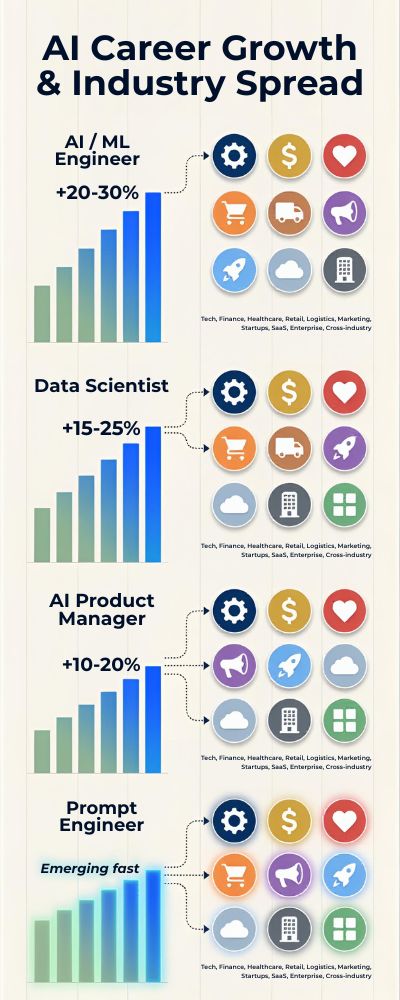
So, where is AI growing? According to a LinkedIn report, AI job postings grew over 20% year-over-year globally. And hiring for AI and machine learning roles is on the rise, even in traditionally non-tech industries. Here’s a quick overview of the stats:
| Role | Growth Trend (YoY) | Typical Industry Spread |
|---|---|---|
| AI / ML Engineer | +20–30% | Tech, Finance, Healthcare |
| Data Scientist | +15–25% | Retail, Logistics, Marketing |
| AI Product Manager | +10–20% | Startups, SaaS, Enterprise |
| Prompt Engineer (yes, really) | Emerging fast | Cross-industry |
Here’s a fun fact, a “prompt engineer” wasn’t a job title a few years ago, but it’s appearing all over job boards today.
The salary side (because let’s be real, it’s a factor)
The ugly truth is that AI jobs are relatively well paid. In some cases, very well paid.
According to data from Glassdoor, AI jobs in the United States typically range from $120,000 to $180,000 per year depending on experience, and senior roles can go far beyond that.
The sad reality that no one wants to acknowledge, however, is that not everyone will be invited to the party. There is still a skills gap, and it’s a big one.
So are AI jobs actually “taking over?”
The real answer is that it depends on your perspective.
If you’re in a largely repetitive role, then yes, you should feel threatened. There’s a slow and silent invasion of automation happening, like a coworker that somehow magically gets everything done faster than you.
If you’re flexible and willing to learn something new without groaning, then this might actually be a good thing for you.
A report by McKinsey & Company found that up to 30% of current work hours could be automated by 2030, but not necessarily entire jobs. There’s a distinction.
Perhaps AI isn’t actually “taking our jobs”, perhaps it’s just redefining what it means to be valuable at work.
Yeah, okay, that’s not super comfortable. But it’s also where the upside is.
2. 30 AI job statistics you should know
We like to toss around AI stats like confetti, but who’s asking what’s really happening beneath the surface? I mean, some of those stats sound cool and all. But the more you think about them, the more intimate they get. For example: 44% of workers’ core skills are expected to change by 2027. That’s not a statistic, that’s almost half your skills going obsolete while you reply to all your emails.
Growth, demand, and the “wait… this is happening fast” moment
Now we’re getting somewhere. Job postings requiring AI skills have grown by over 3.5x since 2016. (LinkedIn)
- AI specialist roles are among the top 10 fastest-growing jobs globally
- Demand for machine learning engineers has increased by roughly 74% over the past four years. (IBM)
You can feel that, can’t you? Even non-techies are starting to run into AI in their everyday work. It’s not a thing of the future anymore, it’s a thing in your software, your workflow, your job description.
The money side (because yeah, it matters)
Let’s not play dumb, salary is important.
| Role | Average Salary (US) |
|---|---|
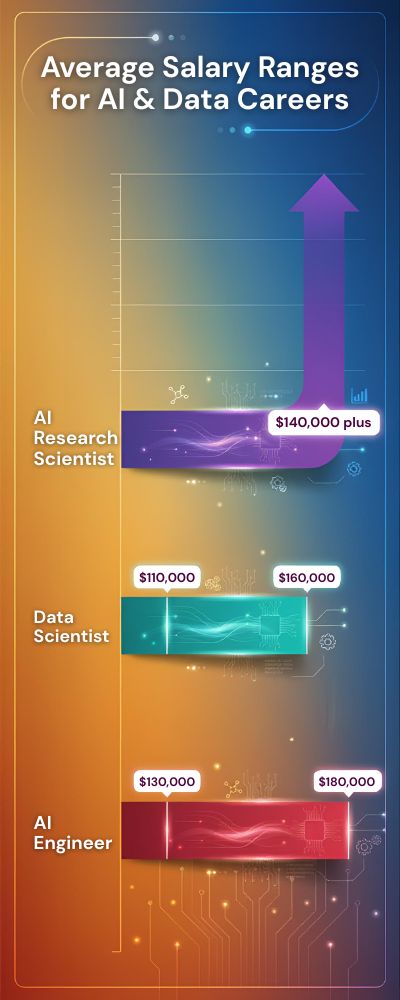
| AI Engineer | $130,000–$180,000 |
| Data Scientist | $110,000–$160,000 |
| AI Research Scientist | $140,000+ |
Want some examples? AI jobs are among the top highest-paying positions today (Glassdoor). Sweet! Except, getting into AI can sometimes feel like trying to get into a private club, and nobody’s willing to give you the password.
Jobs lost… jobs gained… and everything in between
This is the part where people sometimes get a little nervous 83 million jobs could be displaced by 2027… and 69 million new jobs could be created (WEF) 30% of work tasks could be automated by 2030 (McKinsey & Company) 58% of occupations already have at least 30% of tasks that could be automated It’s not as simple as “a robot replaces you.”
It’s more like… your job starts to shift. Tasks start to change. Expectations start to change. And you’re still there… doing your job… while it quietly transforms beneath your feet. That’s why this can be a little unsettling.
The skills gap nobody’s talking about
Here’s the part that isn’t talked about quite as much: Companies are hiring… but they can’t find the talent 75% of employers can’t find the AI talent they need (IBM Skills Report) Only 1 in 10 workers feels very confident using AI tools at work Pew Research Center. The gap? That’s where the opportunity is. It’s also where a lot of people feel stuck… not really a beginner, not really an expert… just… not really sure what to do next.
So what’s the big idea here? If you step back, it all points to this: AI isn’t some far-off tidal wave… it’s already influencing how people work, earn a living, and keep up. And yeah, it can feel a little scary. Like the game rules are changing in the middle of the game. But maybe that’s exactly it. The people who can manage to stay curious, even when it’s uncomfortable, will probably be the first to crack the code.
Fast-growing jobs because of AI (some of them are unexpected)
When you think of AI careers, you probably think of: a guy in a hoodie coding away in a basement somewhere. Honestly, who wouldn’t? That’s what we’ve all been conditioned to believe, and, well… it’s what a lot of AI careers looked like. Once. A while ago.
According to a recent report by the World Economic Forum , AI and machine learning specialists are still some of the fastest-growing jobs in the world. Makes sense. What’s interesting, though, is that they’re not alone anymore. AI is starting to appear in places you wouldn’t expect. Jobs you wouldn’t have imagined. Ones that wouldn’t have appeared on this list a few years ago.
The obvious winners
(no surprises here) Let’s start with the usual suspects, the roles everyone expects to grow.
| Job Role | Growth Insight |
|---|---|
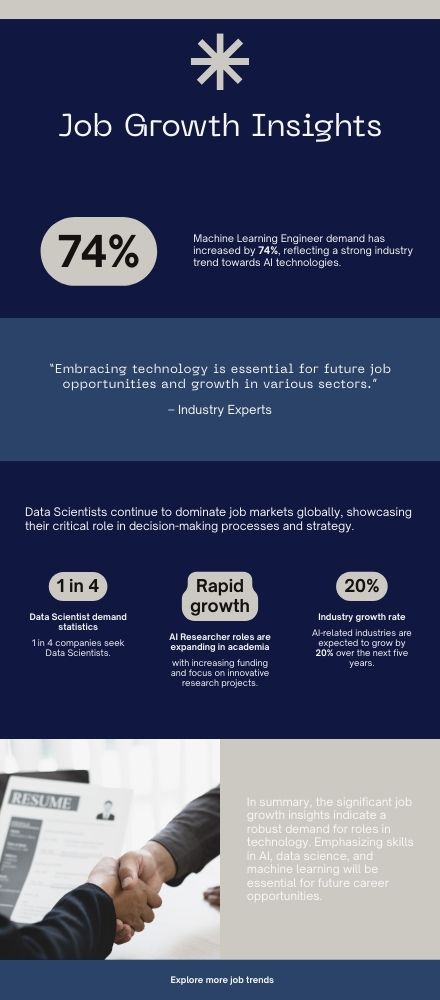
| Machine Learning Engineer | Demand up ~74% in recent years (IBM) |
| Data Scientist | Still one of the most in-demand roles globally |
| AI Researcher | Growing fast in academia + industry |
These positions are in high demand. Not surprising, right? In fact, companies aren’t filling them fast enough. But to be honest, this is the uninteresting part of the article.
The surprising jobs that are quietly exploding
Now we’re getting a little strange here (in a good way).
- Prompt Engineers Yes, that is actually a job title now. According to LinkedIn, generative AI skills have skyrocketed in 2023. People are getting paid to communicate effectively with AI. Wild.
- AI Content Editors Not replacing human writers but rather editing AI-generated content. Ensuring tone, accuracy and making sure it doesn’t sound like a robot wrote it (ironically).
- Ethical AI Specialists Someone needs to ask the question, “Should we build this?” And actually have the companies listen. There’s been a recent surge in AI ethicist positions, mainly in tech and healthcare.
- AI TrainersData Labellers The most unfashionable job on the list. These individuals are required to tell AI what is right and wrong, useful and what is simply nonsense.
Jobs that are changing, not going anywhere
One thing that I think people are overlooking is that not all jobs are being replaced; they are just… evolving.
- Marketing managers who use AI tools every day.
- Designers who collaborate with generative AI.
- Customer support reps who utilize chatbots.
According to McKinsey & Company, by 2030 up to 30% of work activities could be automated, however, that doesn’t necessarily mean the entire position will be replaced. It just means segments of the position will be replaced. Which, depending on your personality is either comforting, or only mildly concerning.
A dose of reality
Here is the thing that I keep coming back to: AI is not just creating jobs, it is just reorganizing who receives the jobs.
| Category | What’s Happening |
|---|---|
| Highly technical roles | Shortage of talent |
| Hybrid roles (AI + other) | Growing fastest |
| Non-AI roles | Slowly evolving |
Not “AI is taking over jobs,” but “AI is subtly shifting the definition of what a job even is.” Now what does that mean for you? Well… It puts you somewhere in between. Are you waiting for the dust to clear so you can react? That day may never arrive. The landscape is shifting.
But if you can step into the uncertainty, even partially, you begin to notice things you hadn’t seen before. Strangely named occupations. New career trajectories. New positions that didn’t exist five minutes ago. And yes, it’s confusing. But it’s also kinda cool to see develop in real time.
3. Jobs AI is doing, and jobs you never expected
You hardly even realize it. Something takes two hours one day, and a year later it takes ten minutes, or you don’t even do it anymore.
In a way, that’s how AI is sneaking in.
Take customer support. A few years ago, every little problem meant a phone call to a human. Today? IBM says AI can already take care of 80% of routine customer queries. OK, sure, sometimes those bots still feel like talking to a brick wall… but they’re getting better.
Data entry and office work follow the same pattern. A study from McKinsey & Company found that a pretty big slice of repetitive tasks, 30% or more, can already be automated. Not jobs, but enough to leave you feeling, “Uh… what am I even doing here?”
The jobs AI is actually good at (right now)
If we’re honest, AI excels in specific areas. It’s not a superpower; it’s just fast, obedient, and oddly.
| Work Type | What AI Handles |
|---|---|
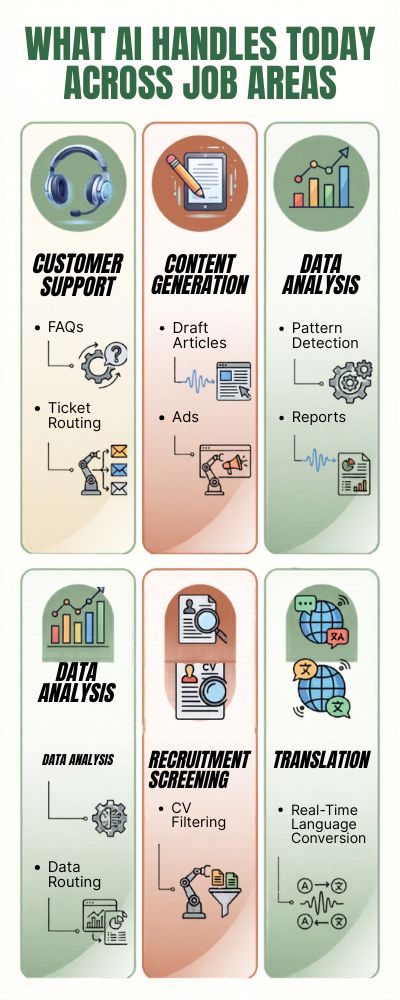
| Customer queries | Basic questions, ticket sorting |
| Writing drafts | First versions of blogs, ads |
| Data crunching | Spotting patterns, generating reports |
| Hiring filters | Scanning CVs (sometimes a bit harshly) |
| Translations | Quick, decent language swaps |
Artificial Intelligence is like the overachieving intern who never goes home, except every so often, it says something so inappropriate you’re just left going, “um… did I just read that?”
The unexpectedness
This is the slightly awkward part. We knew AI was going to take over the boring, methodical jobs. Numbers, spreadsheets, routine tasks. Okay. But anything creative? Writing, graphics, voice-overs? That was meant to be our domain.
Not so much, it turns out.
AI can now write copy, produce pictures, even narrate. And according to PwC, it will contribute $15.7 trillion to the world economy by 2030, in part, by taking over things we didn’t think it would. And yes… it’s a little weird. Not exactly threatening. Just weird enough to get you to hesitate for a moment.
And somehow, new roles are being invented
This still all seems a bit surreal. Jobs where people have to teach us how to “speak” to AI correctly (prompt engineers). Jobs where someone has to ask, “hang on, should we even be doing this?” (ethics officers). Jobs where people have to fact-check AI because, let’s be honest, it still fabricates sometimes (moderators).
The World Economic Forum calculates that millions of new AI-enabled roles will be created even as some roles fade away. It’s not a like-for-like replacement. It’s clumsy. It’s lopsided. It’s a bit messy, if you ask me.
So, is this a good thing or a bad thing? Well, that depends on your point of view. If you’re in a role that’s routine and predictable, then yes, there’s a threat. Let’s not sugarcoat it. But if you’re prepared to adapt, even a little, there’s this surprising silver lining. Not only are roles not disappearing, they’re evolving into new ones. Perhaps that’s the real headline. It’s not that AI is ‘coming for us’, it’s that it’s changing the rules… and we’re all just trying to make sense of it.
4. What are AI jobs paying? Salary trends in reality
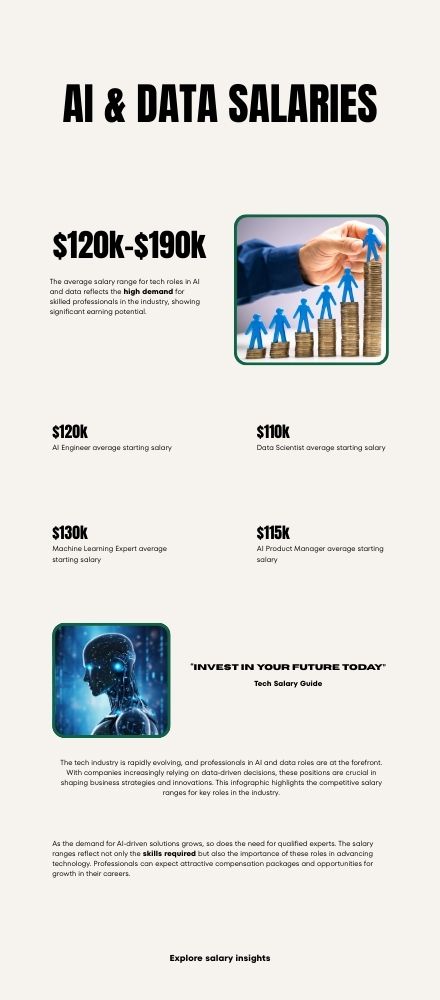
I guess you’ve stumbled upon these titles before. Six-figure AI jobs, get rich quick, great times ahead, etc. And, yes, there’s substance to it. AI engineers in the US are taking home between 120,000 and 180,000 dollars a year, according to Glassdoor. Some of them much more. Yes, the money is there. The thing is, it’s not that straightforward. Reaching that point is a different topic.
What people are actually earning across roles
Here’s a rough overview, so it doesn’t sound too theoretical.
| Role | Salary Range |
|---|---|
| AI Engineer | 120k – 180k |
| Data Scientist | 110k – 160k |
| Machine Learning Expert | 130k – 190k |
| AI Product Manager | 115k – 170k |
So why are companies willing to pay so much? Well, there’s a simple answer for this. Supply and demand. Not enough supply, way too much demand. According to a study done by IBM, over 75% of companies are struggling to find candidates with the required AI skills.
Therefore, when they actually find someone competent, they don’t think twice about shelling out the big bucks. You can sort of sense the desperation here. Everyone wants to build AI products, but no one knows how.
The truth people aren’t telling you
Everybody isn’t getting paid that much. If you’re a recent graduate or making a career shift, the figures would be much lower. According to Payscale, entry-level roles often sit closer to 70,000 to 90,000 dollars.
Still, a respectable amount of money. But certainly not the amounts people dream of when they see those headlines. And yes, I can see how this might be frustrating. It’s like only seeing the highlight reel of someone’s career and not the grind. Location plays a huge role, whether people like it or not.
| Region | Salary Range |
|---|---|
| United States | 120k – 180k |
| Europe | 60k – 110k |
| Asia | 40k – 90k |
So yeah, the same role, but significantly different salaries. Don’t like that, but it’s true. Is it worth it? Well, it depends. Are you only motivated by salary? Then probably not. It’s a tough job. You have to continuously learn. You have to continuously be on your toes and pay attention to everything. But if you have any interest at all, it’s probably worth it. The money’s there, it’s just not handed to you.
5. The skills you are losing, and the skills you are gaining
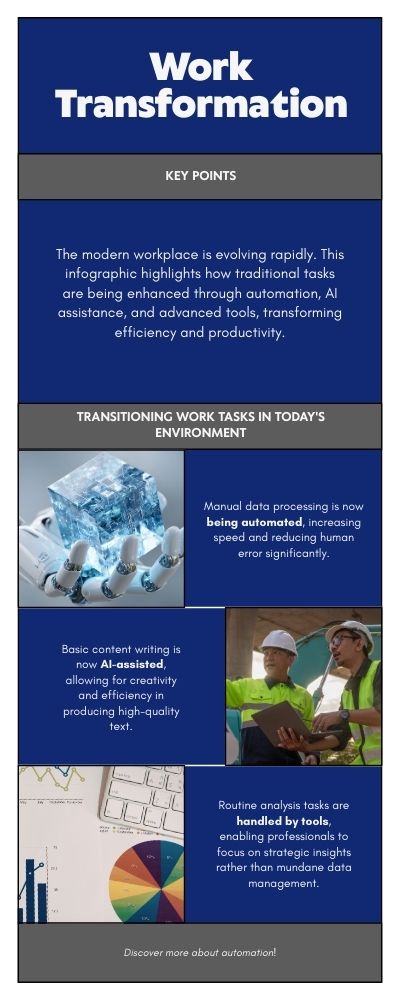
This part sneaks up on people. You don’t wake up one day and suddenly forget how to do your job. It’s more subtle than that. Tasks you used to spend hours on? Now done in minutes. Or worse, done automatically without you even thinking about it.
According to World Economic Forum, 44% of core job skills are expected to change by 2027. Not improve. Not evolve. Change. That’s a big deal, whether we admit it or not.
The skills slowly fading into the background
Let’s start with the uncomfortable bit.
| Skill Type | What’s Happening |
|---|---|
| Manual data processing | Being automated |
| Basic content writing | AI-assisted now |
| Routine analysis | Handled by tools |
| Admin coordination | Streamlined heavily |
You see it in the small things. Less time spent reading spreadsheets. Less time spent writing emails from scratch. It’s convenient, yes… but those are also skills that are no longer being used in the same way. One report from McKinsey & Company found that up to 30% of work activities could be automated by 2030. A lot of those activities are bang in the middle of routine jobs.
The new skills quietly taking over
Now, here’s the flip-side. As some skills are gradually disappearing, others are quietly emerging:
- The ability to work with AI tools, not around them
- The ability to ask better questions, not just provide answers
- Critical thinking, especially when AI output doesn’t quite stack up
- Communication skills that go beyond the basics
According to LinkedIn, skills related to “AI literacy & adaptability” are some of the fastest growing in the world. And if I’m being honest, it all feels a little strange. It’s less about doing the work yourself… and more about managing the work.
The weird trade-off nobody talks about
OK, so here’s what I’ve observed. We’re moving quicker. We’re being more efficient. We’re being more productive. But at the same time, there’s a sneaky dependency creeping in. You’re relying more on tools. You’re double-checking less. You’re trusting the system… until it fails and you’re left wondering “wait, would I have spotted that mistake myself?” And that’s where it gets tricky. So what should you actually focus on? If you zoom out, the trend is pretty obvious.
| Losing Ground | Gaining Ground |
|---|---|
| Repetition | Adaptability |
| Manual execution | Strategic thinking |
| Basic technical tasks | Problem framing |
| Following instructions | Asking better questions |
The emphasis is being removed from “doing” and being replaced with “thinking about what should be done.”
Where this leaves you
It’s not a good feeling. Let’s put it that way.
But it’s also not as dire as it often comes across.
You’re not completely losing value if you’re willing to adapt, even just a tiny bit. You’re just being asked to fill a somewhat different part.
And perhaps that’s the true lesson.
It’s not your skills are going away… they’re just being re-arranged.
6. Is it getting easier or harder to land an AI job?

This is one of those answers nobody wants to hear. AI jobs are abundant. Yet, landing one feels like trying to slip through a door that is getting smaller by the day. Job postings requiring AI skills have increased over the past few years, according to LinkedIn. Yes, more AI job openings are available. This is true. However, if you dig deeper, the situation isn’t as simple as it seems.
More job openings… more candidates
There’s a caveat. Everyone has seen the potential. Not only engineers but also marketers, analysts, designers, even career changers. AI-related occupations are among the fastest-growing occupations globally, according to the World Economic Forum’s report, Future of Jobs Report 2023. This sounds wonderful, doesn’t it? However, growth begets interest. Interest begets competition.
| Factor | What’s Happening |
|---|---|
| Job openings | Increasing fast |
| Applicants | Increasing faster |
| Entry expectations | Getting higher |
So while there are more jobs, there are also more people chasing them.
The experience gap is real
This is where things get frustrating.
Companies say they’re desperate for AI talent. Yet somehow, they still expect experience. A lot of it.
According to IBM, over 75 percent of companies struggle to find qualified AI professionals. Which sounds like good news… until you realize they’re often looking for very specific skill sets.
Not just “knows AI,” but knows it deeply. Practically. In real-world situations.
That’s where many people get stuck.
It’s easier to start, but harder to stand out
Here’s the weird paradox.
Learning AI basics has never been easier. Courses, tools, tutorials are everywhere. You can get started from your laptop, no fancy setup needed.
But standing out? That’s the tricky part.
| Stage | Difficulty Level |
|---|---|
| Getting started | Easier than ever |
| Building real skills | Moderate |
| Getting hired | Still hard |
Most people understand the fundamentals these days. Not as many can use them to get anything done.
So… what does work?
Now we get to more practical stuff.
What I have observed is that those who succeed don’t only study concepts. They create things. Little projects. Practical applications. Ugly prototypes that demonstrate their grasp of AI in practice.
They don’t need to be polished. They need to be concrete.
So is it easier or harder?
Well… both.
Easier to learn. Harder to do. Easier to join. Harder to differentiate.
And yes, that can be a bit disheartening. Like the goalposts are shifting.
But hey, maybe that’s just the nature of emerging fields.
The door is ajar more than ever… but you still need to push it open.
7. Remote work, AI jobs and the new gig economy

Do you remember when you had to go somewhere to “work?” You might have been going to an office, a desk, or even just a particular chair, but there was somewhere you went to work. These days, you can work on AI models in your kitchen, check data in a coffee shop, and be a freelancer in three different countries before noon.
Remote work isn’t just a sense, here are some numbers too. A report from McKinsey & Company said that up to 25% of the workforce in advanced economies could work remotely three or more days a week. Add AI to that mix and the focus moves from “where” to “what.” Many AI jobs are remote first.
One of the things you might be surprised by is how many AI jobs don’t require you to go anywhere. Whether you’re training models, doing data analysis, or building tools, most AI work is digital. There was a report from LinkedIn that said remote job postings had skyrocketed since 2020, with tech and AI jobs being one of the biggest contributors to that jump.
| Job Type | Remote Compatibility |
|---|---|
| AI Engineer | High |
| Data Analyst | High |
| AI Content Reviewer | Very High |
| Prompt Specialist | Fully Remote |
You don’t need to commute. You just need Wi-Fi and the ability to actually deliver something useful. The gig economy just got an upgrade
Now here’s where things start to blur a bit. Freelancing used to mean graphic design, writing, maybe some coding. Now you’ve got people doing micro-tasks tied to AI systems. Labeling data. Reviewing outputs. Training models in tiny increments.
According to World Economic Forum, platform-based gig work continues to expand globally, and AI is accelerating that trend in ways that aren’t always obvious. And if you’ve ever tried one of those platforms, you know the feeling. Some tasks take minutes. Some pay well. Some… not so much.
Freedom vs stability… the trade-off nobody can ignore
This is where opinions start to split. On one side, you’ve got flexibility. Work from anywhere. Choose your hours. Stack multiple gigs if you want. On the other side… less stability. Inconsistent income. Fewer guarantees.
| Benefit | Trade-Off |
|---|---|
| Flexibility | Unpredictable income |
| Remote access | Less job security |
| Global opportunities | More competition |
It’s a grey area. It always is. So, where does that put you? Most likely somewhere in the middle. AI, remote work, and gig platforms are all combining to create this new form of work life that doesn’t really fall under the old categories.
It can be a little disconcerting at times, but it’s also kind of liberating. You don’t have to stay in one location. You don’t have to stay in one job. You don’t have to follow one career. Perhaps that’s really what’s going on here. Work isn’t just evolving. It’s becoming liquid.
8. Countries leading the AI job market

Ever wondered if geography still plays a role in this remote-working world? Well, it kinda does. Not as much as it used to, but it definitely influences who’s getting the best gigs, the highest paychecks, and the highest growth rates. Some nations are leading the pack. Others are playing catch-up.
It’s interesting to look at which countries are hiring the most AI talent and where the most demand is. According to LinkedIn, the US, China, and India are the three countries that always seem to top the list for AI hiring and talent growth. Now, that’s no surprise, but these three countries definitely outrank the rest of the world by a fair bit.
The big three
First, let’s talk about the giants.
| Country | What’s Driving Growth |
|---|---|
| United States | Big tech, funding, talent concentration |
| China | Government investment, scale, data access |
| India | Massive talent pool, rapid upskilling |
- United States: Higher-end jobs and research are still going on here. And that shouldn’t come as a surprise. Silicon Valley didn’t just get up and move overnight.
- China: Government support is its go-to strategy. A report by PwC, a consulting firm, found that China may reap the biggest economic benefits from AI by 2030.
- India: It may not be offering the most competitive salaries, but India is producing some of the highest numbers of qualified AI professionals.
- Europe: … not so much. Europe has pockets of strong talent and research, but they’re not as cohesive as other regions. Countries such as Germany, the United Kingdom, and France are pouring a lot of money into AI research, but it’s not always cohesive. Europe is growing its AI talent pool, but still trails behind the United States when it comes to the scale of job creation and investment, the World Economic Forum found.
| Tier | Countries |
|---|---|
| Leaders | US, China |
| Fast growers | India, UK, Germany |
| Emerging hubs | Canada, Singapore, UAE |
This will get closer eventually. With remote work, it’s getting closer.
However, currently some countries are leading… and everyone else is just following.
9. AI job market is not limited to tech anymore

If you thought AI jobs all fell into one of the following buckets, engineer, coder, or someone else who works in the dark technical netherworld, think again.
That niche is shrinking. Or, well, non-existent anymore.
AI skills are now being demanded across many industries outside of tech, according to LinkedIn. Marketing departments are clamoring for it. Healthcare companies are looking for it. Finance is all over it like a cheap suit.
Industries quietly hiring AI talent
Some of these shouldn’t surprise you. But others… well, maybe.
| Industry | How AI Is Being Used |
|---|---|
| Healthcare | Diagnostics, patient data |
| Finance | Fraud detection, forecasting |
| Retail | Personalization, demand planning |
| Marketing | Content, targeting, analytics |
| Manufacturing | Automation, quality control |
And once it’s embedded like that, jobs start to shift around it. You don’t need to be “technical” anymore… not fully
This is where things get interesting. You don’t always need to build AI systems. Sometimes, you just need to know how to use them properly.
- Marketers using AI tools for campaigns
- Recruiters filtering candidates with AI systems
- Designers working alongside generative tools
According to World Economic Forum , analytical thinking and AI literacy are among the fastest-growing skills globally. So it’s less about becoming an engineer… and more about becoming someone who can work with AI without getting lost in it.
The rise of hybrid roles
This is probably the biggest shift. Jobs aren’t being replaced outright. They’re being blended.
| Traditional Role | Now Includes AI |
|---|---|
| Marketer | AI-driven campaigns |
| Analyst | Automated insights |
| HR Manager | AI-assisted hiring |
| Designer | AI-generated assets |
You’re not changing roles. You’re just adding a new role on top of your existing one.
And, yeah, that can be a bit disorienting. Like your job description just got silently appended to overnight.
So… what does that mean for you?
You’re in a sort of awkward transitionary phase.
AI isn’t just creating new jobs. It’s also transforming old jobs in not totally obvious ways. You go to work one day. The next day you have to make sense of a whole bunch of unfamiliar new tools.
But there’s a bright side here.
You don’t have to learn from scratch. You just have to learn how to pivot what you know.
And maybe that’s the real shift.
AI didn’t just stay in tech. It spread out… and now it’s everyone’s job.
10. Future of jobs: 5-10 years outlook

If you ask 10 people what the job market will look like in 10 years, you’ll get 10 fairly similar responses. Some are positive. Some are a bit bleak. Most are somewhere in the middle.
But step back, and you start to notice some trends.
The World Economic Forum reports that about 23% of jobs will be impacted by 2027. Not eliminated. Just… altered. Transformed. Reshaped. That’s a lot of softening language.
And that word “change” is doing a lot of work here.
Jobs won’t disappear overnight… they’ll slowly morph
This is where people get it wrong.
It’s not like whole careers will fall off a cliff. It’s like chunks of careers will get slowly whittled away.
McKinsey & Company reports that up to 30% of current work activities could be automated by 2030. That doesn’t mean 30% of jobs will get cut. That means chunks of your job will slowly get transformed (see what I mean now?) while the job title will remain the same.
Which, to be honest, is in some ways more disturbing.
The jobs that are likely to grow
Some careers are obviously on an upward trajectory. Not just in tech, but across the board.
| Growing Areas | Why They Matter |
|---|---|
| AI and data roles | Demand still outpacing supply |
| Healthcare | Aging populations |
| Green energy jobs | Climate pressure |
| Digital marketing | Online-first businesses |
It’s not all about AI, but AI is at the center of many of these trends.
And the ones under pressure Conversely, some positions are feeling the pinch.
| At-Risk Areas | What’s Happening |
|---|---|
| Administrative work | Automation taking over |
| Basic data handling | Tools doing it faster |
| Repetitive tasks | Easily replaceable |
It’s not personal. Efficiency is just doing it’s thing.
The bigger change is not what we do but how we work
This is where I get my anxiety.
The nature of work is less prescriptive. It’s more fluid. More hybrid. Less role-based.
You’re not just a marketer. You’re a marketer that understands AI too. Or a designer who collaborates with algorithms. Or an analyst that interrogates data.
It’s a subtle shift… but profoundly transformative.
So… how the heck are you meant to respond to all this?
That’s the question, isn’t it?
You could try to plan your way through this. But this starts to feel like dancing with a moving dot.
Perhaps a better way is a little more obvious.
Be adaptive. Be curious. Keep learning even when it feels clunky and a little maddening.
Because if one thing is true it’s this:
The future of work is not defined. It’s still being written.
11. What does it all mean for your career?

The numbers, the directions, the forecasts… they’re all very interesting. Except after a while, you start to wonder: “Okay, what does this mean for me?” And that can be a tricky place to hang out. The World Economic Forum says that 44% of the global workforce will need to be reskilled by 2027. That’s almost half of the workforce. So if you’re feeling a little uncertain, you’re definitely not alone.
You’re probably not as “behind” as you think
There’s a silent hysteria in the air. As if everyone else has their shit together. Then you read the statistics. Pew Research Center reports that a majority of workers say they aren’t very or at all prepared to work with artificial intelligence. That feeling of being a bit disorientated? It’s more widespread than we let on. Which, perversely, is sort of comforting.
The career ladder has flattened
The career ladder isn’t so ladder-like anymore. This is a pattern I’ve observed. Careers used to be straightforward. First this, then that, then that. Now it’s more… this, then that, then sideways, then up, then down, then who-the-hell-knows.
| Old Model | What’s Changing |
|---|---|
| One clear path | Multiple shifting paths |
| Fixed roles | Blended skill sets |
| Long-term stability | Constant adaptation |
So what is relevant right now?
This is the tactical part.
You don’t need to become an AI master. Most of us aren’t.
But some things do seem to matter:
- Getting familiar with working with AI tools in your work
- Developing the ability to critically evaluate outputs, rather than just accepting them
- Developing skills that don’t have a short shelf life, such as communication and problem-solving
According to LinkedIn, adaptability and AI literacy are among the top skills growing globally.
Which essentially means… flexibility is increasingly becoming a skill.
The harsh reality… and the silver lining
There is no right answer here. That’s probably the toughest part.
Things are moving fast. Jobs are changing in real-time. And yes, it can be a bit disorienting.
But there’s a silver lining in all of this too.
| Challenge | Opportunity |
|---|---|
| Jobs evolving | New roles emerging |
| Skills becoming outdated | Chance to reskill |
| Uncertainty | More flexibility |
It’s not about having all the answers. It’s about keeping you in the game.
So where does that leave you?
Right in the middle of things.
Not behind. Not stuck. Just… dealing with an unfinished story.
And perhaps that will do.
Because one thing does seem obvious:
Your career is no longer a journey that you plot out at the beginning. It’s a journey you craft, in the moment.
12. AI Jobs in Healthcare Are Growing Faster Than Expected
Healthcare is becoming a major AI employer. Roles include data analysis, diagnostics, and automation. Hospitals and health tech companies are investing heavily. It’s one of the fastest-growing non-tech sectors for AI jobs.
13. AI Hiring Is Expanding Beyond Big Tech Companies
It’s not just big names hiring anymore. Startups, banks, retailers, and even farms are hiring AI talent. This broad adoption is spreading opportunities across industries. AI jobs are becoming mainstream.
14. Companies Using AI Are Hiring More, Not Less
Instead of cutting jobs, many companies are expanding teams. AI allows them to scale faster. They still need people to manage, train, and improve systems. Human roles are shifting, not disappearing.
15. AI Job Growth Is Strongest in Asia and North America
These regions are leading the AI hiring wave. Countries like the U.S., China, and India are investing heavily. Government support and tech ecosystems play a big role. This is where most opportunities are concentrated.
16. Women Are Still Underrepresented in AI Jobs
Despite growth, gender gaps remain. Women hold a smaller share of AI roles globally. There’s increasing awareness and effort to change this. Diversity is becoming an important conversation in AI hiring.
17. AI Certifications Can Boost Hiring Chances by 30%
Employers value proof of skills. Certifications from recognized platforms can make a difference. They help candidates stand out in competitive markets. Especially useful for career switchers.
18. Many AI Roles Don’t Require a Traditional Degree
This is a big shift from the past. Skills and projects often matter more than formal education. Self-taught professionals are entering the field successfully. AI is more accessible than many people think.
19. AI Tools Are Becoming Part of Everyday Jobs
Even if your title doesn’t include “AI,” you’re probably using it. Writing, design, data work – AI tools are everywhere. This is quietly changing how work gets done. It’s less about replacement and more about assistance.
20. Job Titles Are Changing Because of AI
New titles are popping up all the time. Roles like AI strategist, automation specialist, and prompt designer didn’t exist before. Companies are redefining positions to match new needs. It’s a sign of a shifting job landscape.
21. AI Can Save Workers Up to 10 Hours Per Week
Automation of repetitive tasks is a major benefit. Many workers report saving several hours weekly. This time can be used for higher-value work. Productivity is one of AI’s biggest selling points.
22. AI Startups Are Hiring Faster Than Large Corporations
Startups move quickly and need talent fast. Many are building AI-first products from scratch. This creates a lot of job openings. It’s a great space for people who want to grow quickly.
23. The Demand for AI Ethics Roles Is Rising
As AI grows, so do concerns around its use. Companies are hiring for ethics, governance, and compliance roles. These jobs focus on responsible AI development. It’s a new but important career path.
24. AI Jobs Often Require Hybrid Skill Sets
Pure technical skills aren’t always enough. Employers look for a mix of tech, business, and communication skills. Understanding real-world problems is just as important. The best candidates are well-rounded.
25. Learning AI Basics Can Take Less Than 6 Months
You don’t need years to get started. Many people pick up foundational skills in a few months. Online courses and hands-on projects help speed things up. It’s more approachable than it seems.
26. AI Is Increasing Demand for Data-Related Roles
Data is the backbone of AI systems. Jobs in data analysis, engineering, and labeling are growing fast. Without data, AI can’t function. This makes data roles more valuable than ever.
27. Younger Workers Are Adopting AI Faster Than Older Generations
Gen Z and millennials are leading AI adoption. They’re quicker to experiment with new tools. This gives them an edge in the job market. It also shapes how workplaces evolve.
28. AI Is Changing Hiring Processes Themselves
Companies are using AI to screen resumes and conduct interviews. This makes hiring faster but also more competitive. Candidates need to optimize how they present themselves. The job search process is evolving too.
29. AI Skills Are Becoming Important in Non-Tech Degrees
Even fields like law, education, and journalism are seeing changes. AI tools are being integrated into these professions. Students are starting to learn AI basics alongside traditional subjects. The shift is happening everywhere.
30. The Future of Work Will Likely Be Human + AI, Not Human vs AI
The biggest takeaway isn’t replacement – it’s collaboration. People who learn to work with AI will have an advantage. Jobs will change, but they won’t disappear overnight. The future is more about partnership than competition.
Conclusion
So, if you add all of this up, it doesn’t seem like a particularly positive “AI is our savior” or negative “AI is taking all the jobs” story. It’s murkier than that. Instead of job losses, we’re seeing job shifts. We’re seeing jobs stretch and morph into something adjacent to what they were. Some people will prosper because of that, some people will suffer for a minute. But that’s true of any transition.
We also have an opportunity here to redefine what a career path even is. Careers don’t have to be so linear anymore. You can iterate, experiment, muddle through. And perhaps that’s the thing that we don’t emphasize enough. None of us really know what we’re doing here. We’re all just muddling through in real-time. And perhaps that’s okay.
Sources:
World Economic Forum – Future of Jobs Report 2023
McKinsey & Company – Future of Work
Glassdoor – AI Engineer Salary Data
Payscale – Salary Insights


